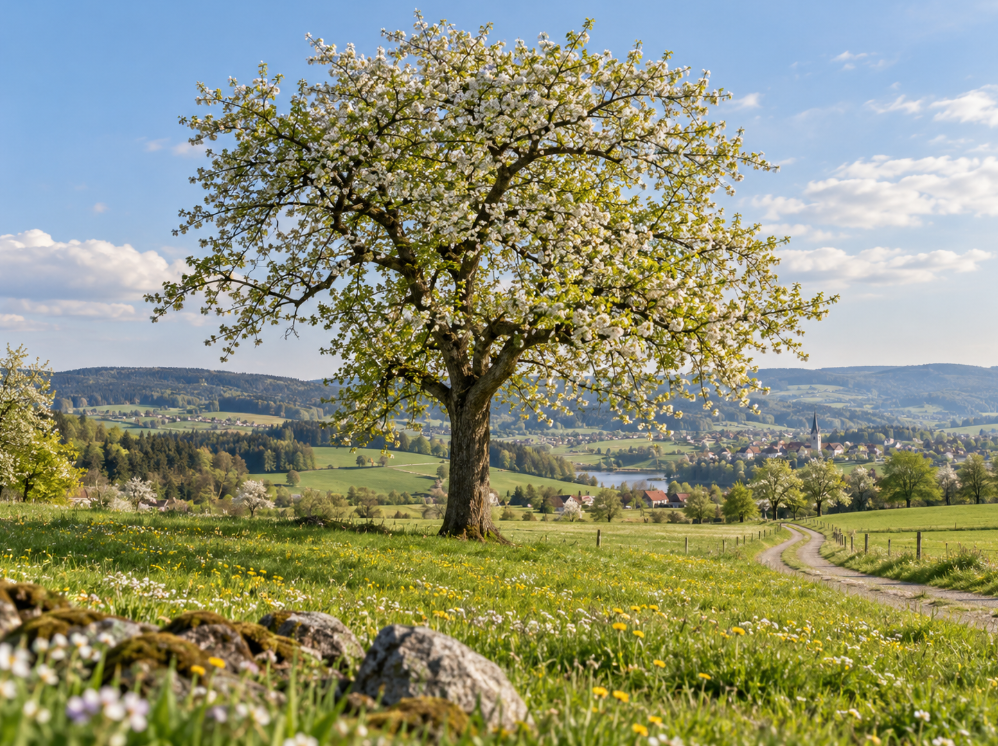
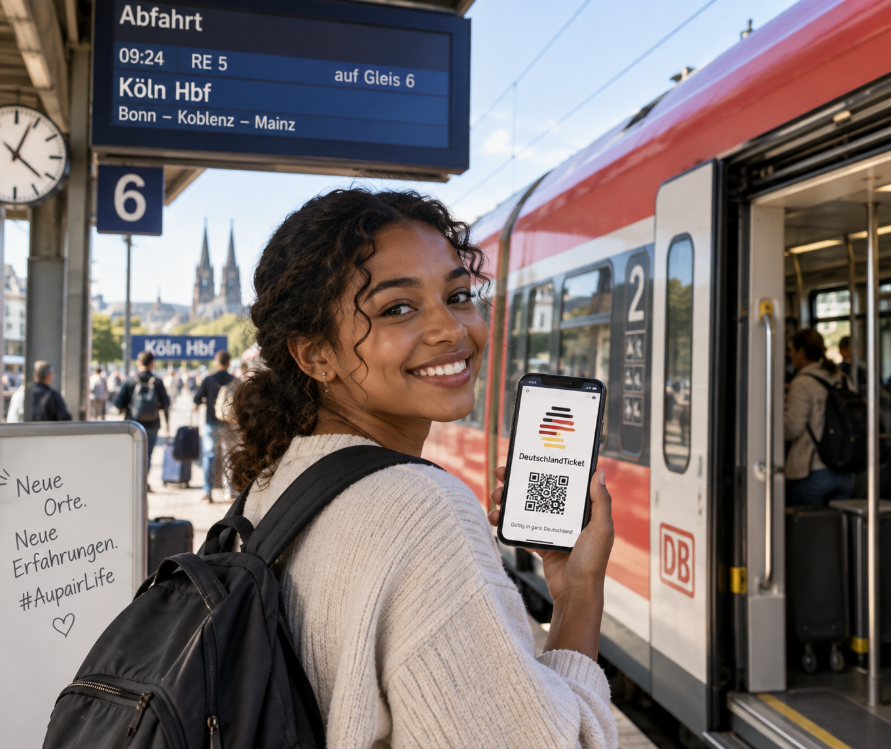
Welcome · Bienvenue · Bienvenida

Choose your Germany Compass

German and English are available. More languages will follow with the same complete content.

Au-pair Pro · Your companion

A warm welcome
to Germany.

We are glad you are here.

Germany is a new country with new rules, habits and plenty of questions. Here you can find out what matters in Germany and why. We explain everyday life clearly and practically, so you can feel more confident step by step without being afraid of making mistakes.

Start my journey
An au pair arriving in Germany
Stage 1 · Before you travel

Ready for Germany?

Good preparation makes your travel day much less stressful. Read each point carefully and discuss anything that is unclear with your host family or the agency in good time.

What clothes will you need when you arrive? Explore the seasons →

Packing a suitcase for Germany
01 Documents A few weeks before departure, check that your passport is valid for long enough and that your visa and entry requirements are fully sorted out. Carry your contract, insurance documents and important letters in your hand luggage and keep secure copies.
02 Insurance Ask someone to explain when your cover starts, what it includes and which number to call if you are ill or have an accident. Save your insurance documents somewhere you can find them quickly.
03 Contacts Take your host family's full address with you. Agree who will collect you, where you will meet and what to do if you are delayed. Save your host family's, agency's and emergency numbers as a screenshot as well, so you can find them without internet access.
04 Packing well Read the section about the seasons and ask the family which clothes you really need. Remember comfortable shoes, a weatherproof jacket, personal medication and any medical documents you may need. Keep medication for the journey in your hand luggage.
05 The first week After a long journey, you need sleep and time to settle in. Agree when someone will show you the house, appliances, children's routines and important routes. The family should explain new tasks first, then practise them together with you.
06 Family rules Before travelling, discuss daily routines, eating habits, religion, privacy, phone use and visitors. No two families live in exactly the same way. Asking a clear question is better than having to guess later.
07 Money Bring a small reserve for your first expenses. Ask when you will receive your first pocket money and how the language-course contribution and agreed travel costs are arranged. Never share your PIN or login codes.
08 Starting with realistic expectations Excitement, uncertainty and homesickness can all happen at the same time. You do not have to speak perfect German or know every rule on your first day. Asking questions shows that you take responsibility.
Is anything still unclear before your flight? Ask. A quick question before travelling can often prevent a big misunderstanding after arrival.
↑ Back to the compass
Stage 2 · Settling in

Your first days with the family

You are entering not just a new house, but an established family routine. Take your time, observe and ask questions. Trust does not develop in a single day.

1

Get to know your new home at your own pace

Ask someone to show you which rooms and things you may use and where towels, bedding and food are kept. Ask about the front-door key, Wi-Fi, heating and house rules. If you do not know an appliance, ask for a demonstration first.

2

Write a clear weekly plan together

Write down together when your working hours start and finish, when you have breaks or time off, and when your language course takes place. Record planned tasks as precisely as possible and discuss changes early.

When plans change unexpectedly: Family life cannot always be planned in advance. If a child becomes ill, even a carefully agreed weekly schedule may need to change at short notice. Try to find a flexible solution together with your host parents. Discuss what help is needed, what you can take on and which commitments you already have. Agree on changes together while respecting your agreed working-hour limits, breaks and time off. Also agree on when any postponed free time or necessary compensatory time off will take place. If you cannot find a suitable solution, your agency can help you talk things through.

3

Get to know each child as an individual

Ask the parents to explain bedtimes, favourite foods, fears, comforting routines and boundaries. You need to know about allergies, who may collect the child and whom to call if anything unusual happens.

4

Practise important routes together first

Walk to nursery, school, the bus stop and the playground with a parent first. Notice safe places to cross the road, save the address and ask what to do if a bus is cancelled or you get lost.

Weekly check-in: What went well? What was unclear? What shall we change? Just 15 calm minutes can prevent many conflicts.
↑ Back to the compass
Stage 3 · Your role

Your role as an au pair in Germany

Cultural exchange is at the heart of your stay. You live with your host family as a temporary family member, improve your German and provide a limited amount of help with childcare and light household tasks.

This also means taking responsibility and keeping agreements. At the same time, the family must not expect you to replace professional full-time childcare, personal care or household management.

An au pair as a temporary family member
max. 6 hours per day as a general rule
max. 30 hours per week, including babysitting
1.5 days off per week at a minimum
4 evenings off per week at a minimum
What counts as working time?

Childcare, babysitting and agreed light housework all count together. Even short tasks add up: preparing breakfast, getting children ready, taking them to nursery, collecting them later and babysitting in the evening all count as working time.

Extra hours for a special occasion must be agreed in advance and compensated with time off. If your actual routine consistently differs from your contract, record starting times, finishing times and tasks for a few days, then speak to the family or agency.

What time off and holiday am I entitled to?

According to the current Federal Employment Agency information sheet, you are entitled to at least 1.5 full rest days per week. At least one Sunday per month and at least four evenings per week should be free. A twelve-month stay includes four weeks of paid holiday; for shorter stays, the general allowance is two working days for each full month.

A trip with your host family only counts as your holiday if you have no more than insignificant duties and are not required to be present. If you care for the children, that is working time, not a full day of holiday.

Your room, food and privacy

As a general rule, you should have your own room within the family home. The family provides accommodation and meals free of charge, including on days off and normally during illness.

Your room is your private space. You are also responsible for its normal tidiness and cleanliness. Agree whether people should knock before entering, when to air the room and what rules apply to visitors.

Language courses, transport and cultural activities

You should have the opportunity to attend a German course and take part in cultural activities. The Federal Employment Agency specifies a contribution of €70 per month towards a course you actually attend, at least €840 for twelve months, plus necessary travel costs to the nearest suitable course. Discuss the course, reimbursement and your contract with the agency.

Course times and travel time should be considered when planning the week. Changes to working hours must not repeatedly prevent regular attendance.

Pocket money, insurance and illness

Pocket money is not payment for an unlimited number of tasks. Payment dates and other benefits should be recorded in your contract or in writing. Ask how to use your health, accident and liability insurance and which documents to show at a medical appointment.

If you are ill, tell the family early. Being ill is not a personal failure. Discuss which childcare arrangements need to change and whether medical advice is needed.

↑ Back to the Germany Compass
Living together

From strangers to my family

Misunderstandings often happen not because anyone means harm, but because both sides assume the other person automatically knows what they mean.

Before a new task

Ask for a complete demonstration. Afterwards, repeat what you have understood in your own words.

“I want to make sure I do this correctly: first I do …, then …, right?”

When the plan changes

Ask about starting and finishing times and time off in return. Say early if your language course or personal plans are affected.

“I can help today. When will I get the extra time back?”

When feedback is unclear

Ask for a specific example. This turns “You are doing it wrong” into something you can actually improve.

“Could you please show me exactly how you would like it done next time?”

When you feel overwhelmed

Safety matters more than pride. Say immediately if you are not yet confident handling a situation with a child or an appliance.

“I do not feel confident with this yet. Please show me again or take over today.”

Handling a conflict in four steps

1. Choose the right moment
Not in a rush at the door or while a child is crying. Ask for a calm, agreed time to talk and briefly explain the subject.
2. Describe what happened rather than blaming
Be specific about the date, task or change of plan. Avoid “always”, “never” and assumptions about intentions.
3. Explain the effect and what you need
Say what the situation means for you and what clear change you need. Agree on a solution that both sides can check.
4. Involve the agency early
If several conversations change nothing, rules are repeatedly broken or you feel unsafe, contact the agency. You do not have to wait until things escalate.

In danger, do not start with a discussion

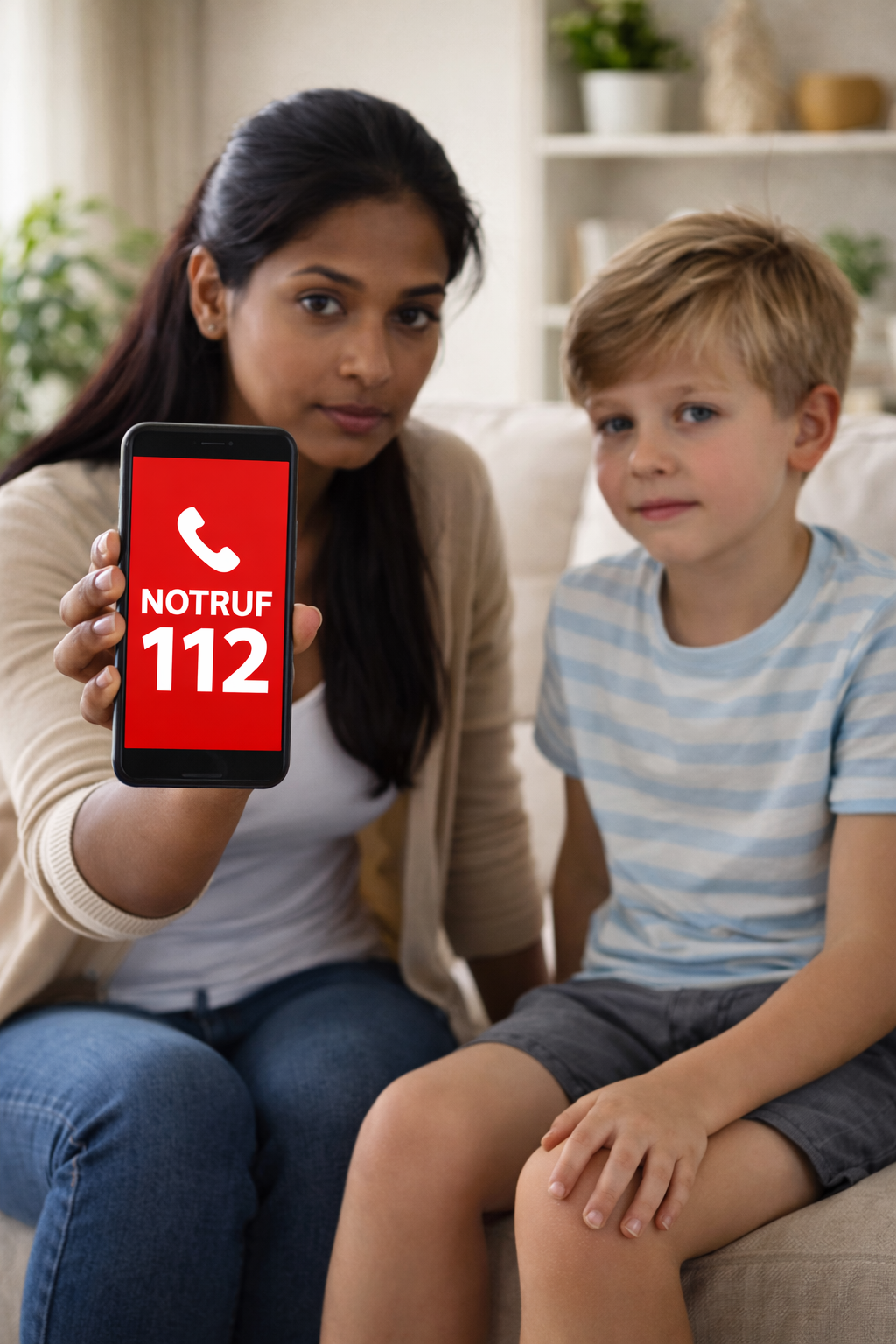
Violence, threats, sexual harassment, taking away your passport or phone, locking you in or preventing medical care are not normal conflicts. Move to a safe place if you can do so safely, call 110 or 112 in immediate danger, then inform the agency or an au-pair emergency helpline.

↑ Back to the Germany Compass
Settling in takes time

You can be yourself here too

When you feel homesick

You can look forward to Germany and miss your family at the same time. Both feelings are allowed. Plan regular calls home, but leave space for your new routine too: a walk, your language course and meeting other au pairs help you find familiar places of your own.

Tell your host family what you are finding difficult. You might say: “I am happy to be here. Today I really miss home. Could we talk for a moment?” If sadness, anxiety or sleep problems continue or seriously affect daily life, seek support from the agency and medical help if needed.

Friendships, free time and your boundaries

Your free time belongs to you. You can meet people, exercise or simply rest in your room. Sharing a meal can be a lovely invitation, but your need for privacy matters too. Agree when to tell each other about coming home late without turning it into constant monitoring.

Meet new online acquaintances in a public place first. Tell someone you trust where you are and arrange your own journey home. You do not have to send money, share private pictures or hand over documents to keep a friendship.

Every family is different

Families in Germany have different religions, languages and family structures. Some have a hot evening meal, others eat bread; some pray, others do not. Ask about your host family's particular habits rather than turning one experience into a rule for all Germans.

You bring valuable experiences too. Explain how celebrations or meals work at home. Respect does not mean giving up your religion, personal boundaries or personality.

Back to the compass ↑
Childcare

Safety, relationships and clear rules

Always ask the parents to explain rules and routines. You can say “Stop” if you are not yet confident doing something safely.

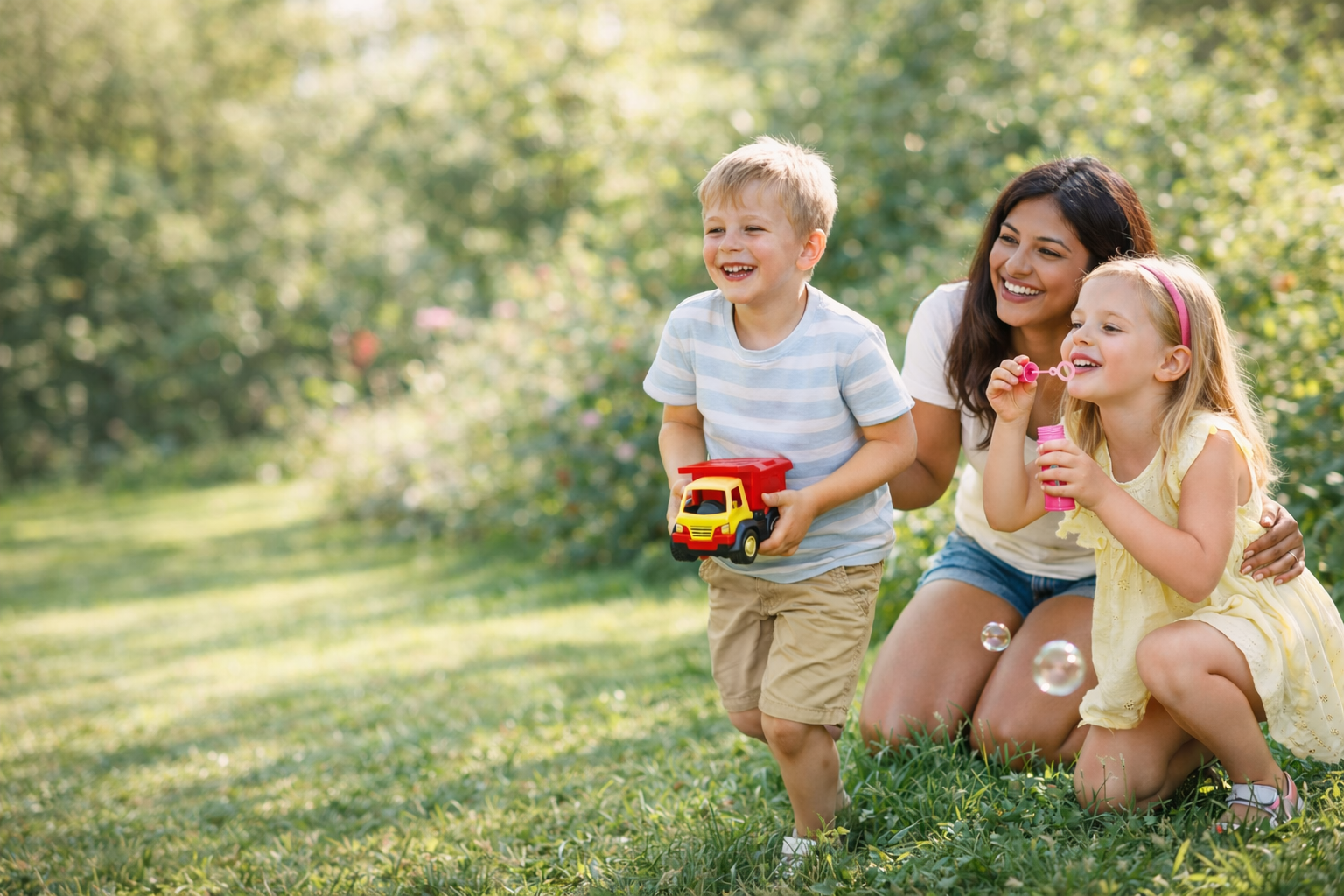
An au pair spending everyday family time with children Attentive · caring · safe

Before caring for the children alone

Ask the parents for the most important phone numbers and where they can be reached. You need to know about allergies, who may collect the children and which routes you may use. Write down important information instead of trying to remember everything.

While you are together

Adapt supervision to the child's age and the situation. Young children need you nearby; water, traffic and open windows need particular attention. Put your phone away if a message would distract you from caring for them. Report problems early, even if you feel embarrassed about a mistake.

When the parents return

Briefly explain how eating, sleep and mood have been. Report every accident and unusual symptom, even if the child has calmed down. Note questions for the next time you look after them and keep the family's personal information private.

Understanding feelings

Difficult moments are part of life too

The child does not want the parents to leave

Stay calm and show the child you understand their feelings: “You want Mum to stay a little longer. I understand.” Agree on a short goodbye routine with the parents beforehand and what you can offer afterwards, such as a familiar book or playing together.

Do not promise something you do not know for certain. “Dad will be back after your nap” only helps if that is actually the plan. Inform the parents if the child takes unusually long to settle or you cannot manage the situation safely.

Anger, arguments and boundaries

Get down to the child's eye level and use a few calm words: “You are angry. I will not let you hit.” First create space and make things safe. Do not shame the child or threaten to withdraw affection. Physical punishment is not a solution.

Offer a small choice: “Would you like to sit next to me or on the cushion?” When the child has calmed down, think together about what they could say or do next time. Ask the parents which rules and soothing routines work in their family.

The child does not want to eat

Offer a small portion and give the child time to get to know it. They may simply look at or smell a new food first. Do not force them to finish their plate or use sweets as a threat or reward.

Ask the parents when meals happen and which familiar alternative is allowed. Tell them if a child drinks unusually little, repeatedly refuses food or has symptoms. Never test allergies or medically prescribed diets by experimenting.

Screen time and photos

Before looking after the children, ask which programmes, apps and time limits are allowed. Give a friendly warning before stopping: “After this episode we will turn the screen off and build something together.” Do not automatically use screens to calm every difficult situation.

Photos and information about children must not be shared online or in private groups without explicit permission. Even an apparently harmless photo can reveal the family's address, nursery or routine.

Back to the compass ↑
44 ideas · Four age groups

Play, discover and get creative

What shall we do today?

A rainy day or ready to go outside? Choose the season, weather and age. You will get five suitable ideas with materials, instructions and a specific adaptation for your child.

Creative play together with children

Development matters more than a birthday. If you are unsure, choose the easier version. Indoor ideas work in every season; outdoors, weather warnings and the parents’ rules always come first.

Browse all ideas without the filters

All instructions remain available here even without scripts. Open an idea and read the version for your child.

Find spring colours · outdoors

You need: A sheet of paper and coloured pencils.

Follow a familiar, safe route and look for colours on flowers, houses and clothes. Stay on the path and do not pick anything unfamiliar.

1–3 years

Start by showing the child two colours and find one matching object together for each. Name it slowly and allow time for a response.

3–6 years

Draw four patches of colour on paper. The child finds something matching each patch and describes it with one word.

6–10 years

The child draws a small checklist of six colours and records one discovery for each. Afterwards, compare which were easy or difficult to find.

10+ years

Create a series of five photos featuring colours and unusual angles. Photograph objects rather than strangers and do not publish anything without permission.

Watch buds grow · outdoors

You need: Paper and a pen.

Find a tree near the house. Look up at a bud and return a few days later to see what has changed. Do not break off branches.

1–3 years

Stay very close to the child. Point out and name two things without letting the child pick them up or put them in their mouth. A few minutes may be enough for this little outing.

3–6 years

The child draws three observations. Ask questions such as: What moved? What was quiet? Find simple words together to describe them.

6–10 years

Let the child make a prediction and compare it with three observations. Record the result as a little nature report.

10+ years

Together, choose a question to investigate and create a short photo report or sketch. Discuss what you know for certain and what is only a guess.

Discover birdsong · outdoors

You need: No materials needed.

Stop somewhere quiet and safe and listen for one minute. Look for the birds with your eyes; leave nests untouched.

1–3 years

Stay very close to the child. Point out and name two things without letting the child pick them up or put them in their mouth. A few minutes may be enough for this little outing.

3–6 years

The child draws three observations. Ask questions such as: What moved? What was quiet? Find simple words together to describe them.

6–10 years

Let the child make a prediction and compare it with three observations. Record the result as a little nature report.

10+ years

Together, choose a question to investigate and create a short photo report or sketch. Discuss what you know for certain and what is only a guess.

Clouds tell stories · outdoors

You need: A dry sitting mat.

Sit on a bench or a lawn where access is allowed and look at cloud shapes without looking into the sun. Describe which animal a cloud reminds you of.

1–3 years

Show two pictures or objects and say a very short sentence. The child can point, make a sound or repeat a word.

3–6 years

Invent a story with a beginning, a small problem and a happy ending. Let the child decide how the character feels.

6–10 years

Take turns adding two sentences. Write or draw the finished story on four pages and read it together later.

10+ years

Create a story as a comic, an audio scene or a short script. Share out the roles and discuss the characters’ different perspectives.

Spring movement game · outdoors

You need: A clear, level space.

Pretend to be a seed slowly growing into a flower: curl up first, then stand tall and finally open your arms. Leave plenty of space between you.

1–3 years

Demonstrate a slow movement, such as small steps or lifting your arms. The child can copy you; there is no need to jump or move quickly.

3–6 years

Agree on three movements and take turns demonstrating them. Plan a break and some water after a few minutes.

6–10 years

The child invents a short movement sequence and explains the rules. Play without eliminating anyone and adjust the difficulty together.

10+ years

The child can plan a short shared workout or game. Discuss effort, breaks and a safe place; pushing through pain is not a competition.

Tracks after the rain · outdoors

You need: Sturdy shoes and paper.

Once rain and storms have passed, look at wet ground from a safe path. Find footprints and draw them later. Stay away from deep puddles and bodies of water.

1–3 years

Stay very close to the child. Point out and name two things without letting the child pick them up or put them in their mouth. A few minutes may be enough for this little outing.

3–6 years

The child draws three observations. Ask questions such as: What moved? What was quiet? Find simple words together to describe them.

6–10 years

Let the child make a prediction and compare it with three observations. Record the result as a little nature report.

10+ years

Together, choose a question to investigate and create a short photo report or sketch. Discuss what you know for certain and what is only a guess.

A garden picnic · outdoors

You need: Water, a sitting mat and snacks agreed with the parents.

Choose a dry, sheltered place. Wash your hands, serve small portions and take all packaging away afterwards.

1–3 years

The child can point to a washed, soft food or mash it with a fork. Prepare everything else yourself and guide every action.

3–6 years

The child can use a spoon to serve cold ingredients and name their colours. You handle knives and heat.

6–10 years

The child can weigh ingredients with you and explain the order of the steps. Check the ingredient list and allergies together.

10+ years

Plan shopping, quantities and steps together. New appliances still need explaining, and you should agree together how to handle heat safely.

Our spring picture · outdoors

You need: Paper, a firm drawing surface and pencils.

Draw a tree or flower you can see outside. There is no need to copy a photograph: observing and using your own ideas matter more.

1–3 years

Prepare large pieces yourself. Let the child choose a colour or shape and press or draw with your help. Do not use parts that could be swallowed.

3–6 years

The child creates their own work and then tells you what it shows. Help with cutting using suitable tools and only as agreed with the parents.

6–10 years

The child first sketches a small plan, chooses materials and tries their own solution. Let them explain what they might do differently next time.

10+ years

Agree on a small project goal and a materials budget. The child develops their own design and can show you their technique afterwards.

Look for shadow shapes · outdoors

You need: Chalk, if permitted.

Go to a clear, shaded area in the morning or later in the day. Observe how people and objects cast shadows. Do not do this in the midday heat.

1–3 years

Demonstrate a slow movement, such as small steps or lifting your arms. The child can copy you; there is no need to jump or move quickly.

3–6 years

Agree on three movements and take turns demonstrating them. Plan a break and some water after a few minutes.

6–10 years

The child invents a short movement sequence and explains the rules. Play without eliminating anyone and adjust the difficulty together.

10+ years

The child can plan a short shared workout or game. Discuss effort, breaks and a safe place; pushing through pain is not a competition.

Collect summer colours — with your eyes · outdoors

You need: Paper and pencils.

Look for bright colours along a shady path and draw your discoveries. Do not collect berries or unfamiliar plants.

1–3 years

Start by showing the child two colours and find one matching object together for each. Name it slowly and allow time for a response.

3–6 years

Draw four patches of colour on paper. The child finds something matching each patch and describes it with one word.

6–10 years

The child draws a small checklist of six colours and records one discovery for each. Afterwards, compare which were easy or difficult to find.

10+ years

Create a series of five photos featuring colours and unusual angles. Photograph objects rather than strangers and do not publish anything without permission.

A cool garden picnic · outdoors

You need: Water and a way to keep food cool.

Prepare a small fruit or bread platter and eat in the shade. Keep dairy products chilled until just before eating; offer water regularly.

1–3 years

The child can point to a washed, soft food or mash it with a fork. Prepare everything else yourself and guide every action.

3–6 years

The child can use a spoon to serve cold ingredients and name their colours. You handle knives and heat.

6–10 years

The child can weigh ingredients with you and explain the order of the steps. Check the ingredient list and allergies together.

10+ years

Plan shopping, quantities and steps together. New appliances still need explaining, and you should agree together how to handle heat safely.

Movement in the shade · outdoors

You need: A shaded, level area.

Slowly act out animals and take short water breaks. In very hot weather, move the activity indoors or to a cooler time of day.

1–3 years

Demonstrate a slow movement, such as small steps or lifting your arms. The child can copy you; there is no need to jump or move quickly.

3–6 years

Agree on three movements and take turns demonstrating them. Plan a break and some water after a few minutes.

6–10 years

The child invents a short movement sequence and explains the rules. Play without eliminating anyone and adjust the difficulty together.

10+ years

The child can plan a short shared workout or game. Discuss effort, breaks and a safe place; pushing through pain is not a competition.

Watch butterflies · outdoors

You need: Sketching paper.

Watch flowers from a distance. Count or draw flying insects without touching them. If anyone has an insect allergy, clarify precautions beforehand.

1–3 years

Stay very close to the child. Point out and name two things without letting the child pick them up or put them in their mouth. A few minutes may be enough for this little outing.

3–6 years

The child draws three observations. Ask questions such as: What moved? What was quiet? Find simple words together to describe them.

6–10 years

Let the child make a prediction and compare it with three observations. Record the result as a little nature report.

10+ years

Together, choose a question to investigate and create a short photo report or sketch. Discuss what you know for certain and what is only a guess.

A summer story in the park · outdoors

You need: A familiar picture book or paper.

Find a shady seat and tell a story about where an imaginary character goes on holiday. Bring water and plan a safe route home.

1–3 years

Show two pictures or objects and say a very short sentence. The child can point, make a sound or repeat a word.

3–6 years

Invent a story with a beginning, a small problem and a happy ending. Let the child decide how the character feels.

6–10 years

Take turns adding two sentences. Write or draw the finished story on four pages and read it together later.

10+ years

Create a story as a comic, an audio scene or a short script. Share out the roles and discuss the characters’ different perspectives.

Make the wind visible · outdoors

You need: A large sheet of paper.

Hold a sheet firmly in your hand and watch it move in the wind. Compare a sheltered spot with a safe, open one. Do not tie strings around body parts.

1–3 years

Stay very close to the child. Point out and name two things without letting the child pick them up or put them in their mouth. A few minutes may be enough for this little outing.

3–6 years

The child draws three observations. Ask questions such as: What moved? What was quiet? Find simple words together to describe them.

6–10 years

Let the child make a prediction and compare it with three observations. Record the result as a little nature report.

10+ years

Together, choose a question to investigate and create a short photo report or sketch. Discuss what you know for certain and what is only a guess.

Drawing in the open air · outdoors

You need: Paper and coloured pencils.

Set up a small drawing table in the shade. Draw a plant or your dream playground and stop before it gets too hot.

1–3 years

Prepare large pieces yourself. Let the child choose a colour or shape and press or draw with your help. Do not use parts that could be swallowed.

3–6 years

The child creates their own work and then tells you what it shows. Help with cutting using suitable tools and only as agreed with the parents.

6–10 years

The child first sketches a small plan, chooses materials and tries their own solution. Let them explain what they might do differently next time.

10+ years

Agree on a small project goal and a materials budget. The child develops their own design and can show you their technique afterwards.

Discover autumn colours · outdoors

You need: Paper and pencils.

Compare yellow, red and brown leaves from a safe path. Only collect clean leaves from familiar plants with permission, and wash your hands afterwards.

1–3 years

Start by showing the child two colours and find one matching object together for each. Name it slowly and allow time for a response.

3–6 years

Draw four patches of colour on paper. The child finds something matching each patch and describes it with one word.

6–10 years

The child draws a small checklist of six colours and records one discovery for each. Afterwards, compare which were easy or difficult to find.

10+ years

Create a series of five photos featuring colours and unusual angles. Photograph objects rather than strangers and do not publish anything without permission.

Make leaf animals · outdoors

You need: Paper, large clean leaves and suitable glue.

Arrange dry leaves from familiar plants into an animal picture. Glue them down and draw legs or eyes; do not use conkers or small decorations with toddlers.

1–3 years

Prepare large pieces yourself. Let the child choose a colour or shape and press or draw with your help. Do not use parts that could be swallowed.

3–6 years

The child creates their own work and then tells you what it shows. Help with cutting using suitable tools and only as agreed with the parents.

6–10 years

The child first sketches a small plan, chooses materials and tries their own solution. Let them explain what they might do differently next time.

10+ years

Agree on a small project goal and a materials budget. The child develops their own design and can show you their technique afterwards.

Listen to the sounds around you · outdoors

You need: Sturdy shoes.

Listen to rustling leaves and the wind somewhere quiet. Stay away from tall trees during storms or when branches could fall.

1–3 years

Stay very close to the child. Point out and name two things without letting the child pick them up or put them in their mouth. A few minutes may be enough for this little outing.

3–6 years

The child draws three observations. Ask questions such as: What moved? What was quiet? Find simple words together to describe them.

6–10 years

Let the child make a prediction and compare it with three observations. Record the result as a little nature report.

10+ years

Together, choose a question to investigate and create a short photo report or sketch. Discuss what you know for certain and what is only a guess.

Like a leaf in the wind · outdoors

You need: A dry, non-slip surface.

Move slowly like a falling leaf and freeze at an agreed signal. Do not run on wet leaves.

1–3 years

Demonstrate a slow movement, such as small steps or lifting your arms. The child can copy you; there is no need to jump or move quickly.

3–6 years

Agree on three movements and take turns demonstrating them. Plan a break and some water after a few minutes.

6–10 years

The child invents a short movement sequence and explains the rules. Play without eliminating anyone and adjust the difficulty together.

10+ years

The child can plan a short shared workout or game. Discuss effort, breaks and a safe place; pushing through pain is not a competition.

A tree changes · outdoors

You need: Paper or a camera, with permission.

Visit the same tree several times and compare its appearance. Observe leaves, branches and the ground without touching mushrooms or berries.

1–3 years

Stay very close to the child. Point out and name two things without letting the child pick them up or put them in their mouth. A few minutes may be enough for this little outing.

3–6 years

The child draws three observations. Ask questions such as: What moved? What was quiet? Find simple words together to describe them.

6–10 years

Let the child make a prediction and compare it with three observations. Record the result as a little nature report.

10+ years

Together, choose a question to investigate and create a short photo report or sketch. Discuss what you know for certain and what is only a guess.

Invent an autumn story · outdoors

You need: A sitting mat or park bench.

Tell a story about a leaf looking for a new home. Look around and include three things you can see in the story.

1–3 years

Show two pictures or objects and say a very short sentence. The child can point, make a sound or repeat a word.

3–6 years

Invent a story with a beginning, a small problem and a happy ending. Let the child decide how the character feels.

6–10 years

Take turns adding two sentences. Write or draw the finished story on four pages and read it together later.

10+ years

Create a story as a comic, an audio scene or a short script. Share out the roles and discuss the characters’ different perspectives.

A little harvest break · outdoors

You need: Washed fruit brought from home.

Sit somewhere dry and look at the apples or pears you brought. Eat only prepared, familiar food, not fruit picked in the wild.

1–3 years

The child can point to a washed, soft food or mash it with a fork. Prepare everything else yourself and guide every action.

3–6 years

The child can use a spoon to serve cold ingredients and name their colours. You handle knives and heat.

6–10 years

The child can weigh ingredients with you and explain the order of the steps. Check the ingredient list and allergies together.

10+ years

Plan shopping, quantities and steps together. New appliances still need explaining, and you should agree together how to handle heat safely.

Find shapes on buildings · outdoors

You need: A pen and paper.

On a short walk, look for circles, triangles and rectangles on windows or signs. Stay together and keep away from the road.

1–3 years

Start by showing the child two colours and find one matching object together for each. Name it slowly and allow time for a response.

3–6 years

Draw four patches of colour on paper. The child finds something matching each patch and describes it with one word.

6–10 years

The child draws a small checklist of six colours and records one discovery for each. Afterwards, compare which were easy or difficult to find.

10+ years

Create a series of five photos featuring colours and unusual angles. Photograph objects rather than strangers and do not publish anything without permission.

Observe winter tracks · outdoors

You need: Warm, dry clothes.

In safe weather, look at tracks in the snow from a path open to the public. Do not step onto ice or frozen bodies of water.

1–3 years

Stay very close to the child. Point out and name two things without letting the child pick them up or put them in their mouth. A few minutes may be enough for this little outing.

3–6 years

The child draws three observations. Ask questions such as: What moved? What was quiet? Find simple words together to describe them.

6–10 years

Let the child make a prediction and compare it with three observations. Record the result as a little nature report.

10+ years

Together, choose a question to investigate and create a short photo report or sketch. Discuss what you know for certain and what is only a guess.

Draw a winter postcard · outdoors

You need: Paper, pencils and a firm drawing surface.

Take a brief look at the winter landscape outside, then draw it somewhere warm. This works even if there is no snow.

1–3 years

Prepare large pieces yourself. Let the child choose a colour or shape and press or draw with your help. Do not use parts that could be swallowed.

3–6 years

The child creates their own work and then tells you what it shows. Help with cutting using suitable tools and only as agreed with the parents.

6–10 years

The child first sketches a small plan, chooses materials and tries their own solution. Let them explain what they might do differently next time.

10+ years

Agree on a small project goal and a materials budget. The child develops their own design and can show you their technique afterwards.

Look for colours in winter · outdoors

You need: Warm clothes and paper.

On a short, safe walk, look for colours on doors, scarves and trees. Plan to return before dark and walk slowly if it is slippery.

1–3 years

Start by showing the child two colours and find one matching object together for each. Name it slowly and allow time for a response.

3–6 years

Draw four patches of colour on paper. The child finds something matching each patch and describes it with one word.

6–10 years

The child draws a small checklist of six colours and records one discovery for each. Afterwards, compare which were easy or difficult to find.

10+ years

Create a series of five photos featuring colours and unusual angles. Photograph objects rather than strangers and do not publish anything without permission.

Move to keep warm · outdoors

You need: A level, ice-free area.

March on the spot together, take turns raising your arms and make small steps. Avoid running on slippery paths; go inside if you feel cold.

1–3 years

Demonstrate a slow movement, such as small steps or lifting your arms. The child can copy you; there is no need to jump or move quickly.

3–6 years

Agree on three movements and take turns demonstrating them. Plan a break and some water after a few minutes.

6–10 years

The child invents a short movement sequence and explains the rules. Play without eliminating anyone and adjust the difficulty together.

10+ years

The child can plan a short shared workout or game. Discuss effort, breaks and a safe place; pushing through pain is not a competition.

Watch birds in winter · outdoors

You need: A safe observation spot.

Watch birds outside or through a window. Talk about where they find shelter. Do not touch animals and only feed them after getting knowledgeable advice.

1–3 years

Stay very close to the child. Point out and name two things without letting the child pick them up or put them in their mouth. A few minutes may be enough for this little outing.

3–6 years

The child draws three observations. Ask questions such as: What moved? What was quiet? Find simple words together to describe them.

6–10 years

Let the child make a prediction and compare it with three observations. Record the result as a little nature report.

10+ years

Together, choose a question to investigate and create a short photo report or sketch. Discuss what you know for certain and what is only a guess.

Snow figures — if there is snow · outdoors

You need: Waterproof gloves.

Make small figures on the ground in a safe place. Do not eat snow or throw hard snowballs. If there is no snow, draw the figure indoors.

1–3 years

Prepare large pieces yourself. Let the child choose a colour or shape and press or draw with your help. Do not use parts that could be swallowed.

3–6 years

The child creates their own work and then tells you what it shows. Help with cutting using suitable tools and only as agreed with the parents.

6–10 years

The child first sketches a small plan, chooses materials and tries their own solution. Let them explain what they might do differently next time.

10+ years

Agree on a small project goal and a materials budget. The child develops their own design and can show you their technique afterwards.

A winter fairy tale on your walk · outdoors

You need: A short, familiar route.

As you walk slowly, invent a character with a warm hat and a destination. Each person tells part of the story; do not extend the walk if anyone is cold.

1–3 years

Show two pictures or objects and say a very short sentence. The child can point, make a sound or repeat a word.

3–6 years

Invent a story with a beginning, a small problem and a happy ending. Let the child decide how the character feels.

6–10 years

Take turns adding two sentences. Write or draw the finished story on four pages and read it together later.

10+ years

Create a story as a comic, an audio scene or a short script. Share out the roles and discuss the characters’ different perspectives.

Warm up and eat together · outdoors

You need: A snack at home agreed in advance.

Plan a short winter walk, then prepare warm porridge or a mild soup indoors. Check the temperature before the children taste it.

1–3 years

The child can point to a washed, soft food or mash it with a fork. Prepare everything else yourself and guide every action.

3–6 years

The child can use a spoon to serve cold ingredients and name their colours. You handle knives and heat.

6–10 years

The child can weigh ingredients with you and explain the order of the steps. Check the ingredient list and allergies together.

10+ years

Plan shopping, quantities and steps together. New appliances still need explaining, and you should agree together how to handle heat safely.

A sensory box with large objects · indoors

You need: An open box, a large wooden spoon, a flannel and a large soft ball.

Prepare three clean, unbreakable objects. The child feels them with their eyes open and describes them as soft or hard. Nothing should break into parts that could be swallowed.

1–3 years

Stay very close to the child. Point out and name two things without letting the child pick them up or put them in their mouth. A few minutes may be enough for this little outing.

3–6 years

The child draws three observations. Ask questions such as: What moved? What was quiet? Find simple words together to describe them.

6–10 years

Let the child make a prediction and compare it with three observations. Record the result as a little nature report.

10+ years

Together, choose a question to investigate and create a short photo report or sketch. Discuss what you know for certain and what is only a guess.

Songs with movements · indoors

You need: A familiar children’s song.

Ask the family for a favourite song. Sing it together and invent movements for three words; keep the music at a comfortable volume.

1–3 years

Demonstrate a slow movement, such as small steps or lifting your arms. The child can copy you; there is no need to jump or move quickly.

3–6 years

Agree on three movements and take turns demonstrating them. Plan a break and some water after a few minutes.

6–10 years

The child invents a short movement sequence and explains the rules. Play without eliminating anyone and adjust the difficulty together.

10+ years

The child can plan a short shared workout or game. Discuss effort, breaks and a safe place; pushing through pain is not a competition.

Build with large blocks · indoors

You need: Large, age-appropriate building blocks.

Build a tower, house or bridge on the floor. Afterwards, compare colours and shapes. Keep the floor free of trip hazards.

1–3 years

Prepare large pieces yourself. Let the child choose a colour or shape and press or draw with your help. Do not use parts that could be swallowed.

3–6 years

The child creates their own work and then tells you what it shows. Help with cutting using suitable tools and only as agreed with the parents.

6–10 years

The child first sketches a small plan, chooses materials and tries their own solution. Let them explain what they might do differently next time.

10+ years

Agree on a small project goal and a materials budget. The child develops their own design and can show you their technique afterwards.

A colour hunt in the room · indoors

You need: Paper and coloured pencils.

First find three clearly visible objects yourself. The child then finds matching colours without opening cupboards, climbing or using other people’s belongings.

1–3 years

Start by showing the child two colours and find one matching object together for each. Name it slowly and allow time for a response.

3–6 years

Draw four patches of colour on paper. The child finds something matching each patch and describes it with one word.

6–10 years

The child draws a small checklist of six colours and records one discovery for each. Afterwards, compare which were easy or difficult to find.

10+ years

Create a series of five photos featuring colours and unusual angles. Photograph objects rather than strangers and do not publish anything without permission.

Let pictures tell a story · indoors

You need: A picture book.

Look at a page and ask: Who is there? What happens next? You do not need to read the printed text perfectly to start a good conversation.

1–3 years

Show two pictures or objects and say a very short sentence. The child can point, make a sound or repeat a word.

3–6 years

Invent a story with a beginning, a small problem and a happy ending. Let the child decide how the character feels.

6–10 years

Take turns adding two sentences. Write or draw the finished story on four pages and read it together later.

10+ years

Create a story as a comic, an audio scene or a short script. Share out the roles and discuss the characters’ different perspectives.

Make your own postcard · indoors

You need: Thick paper and suitable pens or pencils.

Fold paper into a card and decorate a greeting. The child decides who it is for and what you will write inside together.

1–3 years

Prepare large pieces yourself. Let the child choose a colour or shape and press or draw with your help. Do not use parts that could be swallowed.

3–6 years

The child creates their own work and then tells you what it shows. Help with cutting using suitable tools and only as agreed with the parents.

6–10 years

The child first sketches a small plan, chooses materials and tries their own solution. Let them explain what they might do differently next time.

10+ years

Agree on a small project goal and a materials budget. The child develops their own design and can show you their technique afterwards.

Animal movements in the living room · indoors

You need: A clear, non-slip area.

Move breakable things away and set clear boundaries. Move like a tortoise, penguin or cat without climbing on furniture.

1–3 years

Demonstrate a slow movement, such as small steps or lifting your arms. The child can copy you; there is no need to jump or move quickly.

3–6 years

Agree on three movements and take turns demonstrating them. Plan a break and some water after a few minutes.

6–10 years

The child invents a short movement sequence and explains the rules. Play without eliminating anyone and adjust the difficulty together.

10+ years

The child can plan a short shared workout or game. Discuss effort, breaks and a safe place; pushing through pain is not a competition.

A little family theatre · indoors

You need: Large, safe everyday objects.

A wooden spoon becomes a character and a cloth becomes a landscape. Invent a small problem and help the character find a solution together.

1–3 years

Show two pictures or objects and say a very short sentence. The child can point, make a sound or repeat a word.

3–6 years

Invent a story with a beginning, a small problem and a happy ending. Let the child decide how the character feels.

6–10 years

Take turns adding two sentences. Write or draw the finished story on four pages and read it together later.

10+ years

Create a story as a comic, an audio scene or a short script. Share out the roles and discuss the characters’ different perspectives.

Our fruit face · indoors

You need: Soft fruit suitable for the child and a plate.

Wash your hands and the fruit. Prepare pieces safely for the child’s age. Arrange them into a face and then eat them while sitting down.

1–3 years

The child can point to a washed, soft food or mash it with a fork. Prepare everything else yourself and guide every action.

3–6 years

The child can use a spoon to serve cold ingredients and name their colours. You handle knives and heat.

6–10 years

The child can weigh ingredients with you and explain the order of the steps. Check the ingredient list and allergies together.

10+ years

Plan shopping, quantities and steps together. New appliances still need explaining, and you should agree together how to handle heat safely.

Discover kitchen words · indoors

You need: A bowl, a large spoon and a measuring jug.

Place three cold, unbreakable kitchen utensils on the table. Show how to mix, measure or serve with them and say their German names.

1–3 years

Stay very close to the child. Point out and name two things without letting the child pick them up or put them in their mouth. A few minutes may be enough for this little outing.

3–6 years

The child draws three observations. Ask questions such as: What moved? What was quiet? Find simple words together to describe them.

6–10 years

Let the child make a prediction and compare it with three observations. Record the result as a little nature report.

10+ years

Together, choose a question to investigate and create a short photo report or sketch. Discuss what you know for certain and what is only a guess.

A small art exhibition · indoors

You need: Paper and pencils.

Everyone draws something that makes them happy. Place the pictures next to each other and tell one another what they show.

1–3 years

Prepare large pieces yourself. Let the child choose a colour or shape and press or draw with your help. Do not use parts that could be swallowed.

3–6 years

The child creates their own work and then tells you what it shows. Help with cutting using suitable tools and only as agreed with the parents.

6–10 years

The child first sketches a small plan, chooses materials and tries their own solution. Let them explain what they might do differently next time.

10+ years

Agree on a small project goal and a materials budget. The child develops their own design and can show you their technique afterwards.

Clap quietly and loudly · indoors

You need: No extra materials.

Clap a slow rhythm and try quiet clapping, slightly louder clapping and pauses. Be mindful of sensitive ears; keep the game comfortable.

1–3 years

Demonstrate a slow movement, such as small steps or lifting your arms. The child can copy you; there is no need to jump or move quickly.

3–6 years

Agree on three movements and take turns demonstrating them. Plan a break and some water after a few minutes.

6–10 years

The child invents a short movement sequence and explains the rules. Play without eliminating anyone and adjust the difficulty together.

10+ years

The child can plan a short shared workout or game. Discuss effort, breaks and a safe place; pushing through pain is not a competition.

Keep exploring

More ideas to try

Here you will find more games by age, for rainy days and for short breaks together. Open a panel and choose what suits the children and your day.

1–3 years

Discover

Prepare a sensory box

Put a few large, safe objects in an open box, such as a soft flannel, a large wooden spoon, a clean sponge and a smooth ball. The child can feel them and learn words such as soft, hard, warm and cold. Do not use small, sharp or breakable objects.

Play songs with movements

Choose a simple children’s song the family knows and connect words with movements. For ‘hands up’, lift your hands; for ‘turn’, turn around slowly. Ask the parents for their children’s playlist or find an age-appropriate song together.

Learn colours and shapes with building blocks

This is not just tidying up. Build something together first, then sort playfully: put all the red blocks in one bowl and the blue ones in another, or separate large and small blocks. Name the colours and sizes in German.

Look for colours on a walk

For example, ask: ‘Can you find something yellow?’ The child might spot a flower, a traffic sign or a jacket. Do not touch or pick anything unfamiliar, and stay on the route agreed with the parents.

3–6 years

Invent

Make paper-plate animals

Use a paper plate, paper, non-toxic pens and glue to make an animal. Ask the child which animal it should be, what colour it is and where it lives.

Build a safe cushion obstacle course

Place cushions flat on a clear floor and invent stations for stepping, balancing or hopping. Keep the course away from furniture edges and remove sliding rugs; do not jump from sofas or tables.

Tell a picture story

Choose three to five pictures. The child decides who the main character is, what happens and how the story ends. There is no wrong way to imagine.

Make a leaf collage

Collect clean, safe leaves. Dry them, arrange them by colour or shape and glue them into an animal or landscape. Wash your hands afterwards.

6–10 years

Investigate

A treasure hunt with clues

Hide three to five clues in a safe area. Each clue contains a small task or leads to the next place. Clearly agree beforehand where searching is allowed.

Prepare a simple recipe

The child can measure ingredients, stir batter or sort vegetables. Check allergies first; knives, the hob and hot liquids require direct supervision.

A comic or stop-motion story

Plan the beginning, problem and ending. For stop motion, photograph a figure after each small movement. Do not publish pictures of the child without permission.

Nature bingo in the park

Draw squares showing a tree, bird, stone, something round and three colours. You win together when you have spotted everything — do not touch or eat anything unfamiliar.

10+ years

Create together

A playlist or photo challenge

Create a playlist for a shared activity or photograph colours and shapes. Agree on music, photos and privacy with the parents beforehand.

A sports tournament or bike ride

Let the child help plan the rules, route and breaks. Check the weather, helmets, bicycles and a safe route home; the family’s rules always apply.

Cook a dish from your home country

Explain when people eat the dish and which ingredients are typical. Choose a mild, family-friendly version and check allergies.

Plan a project together

Plan a photo book or room decoration, for example. Divide the project into small steps and agree on materials, time and tidying up beforehand.

Rainy day

Indoors

Build a safe reading den

Put blankets over stable chairs and make it cosy with cushions. Keep lamps, radiators and exit routes clear. Then let the child choose a book.

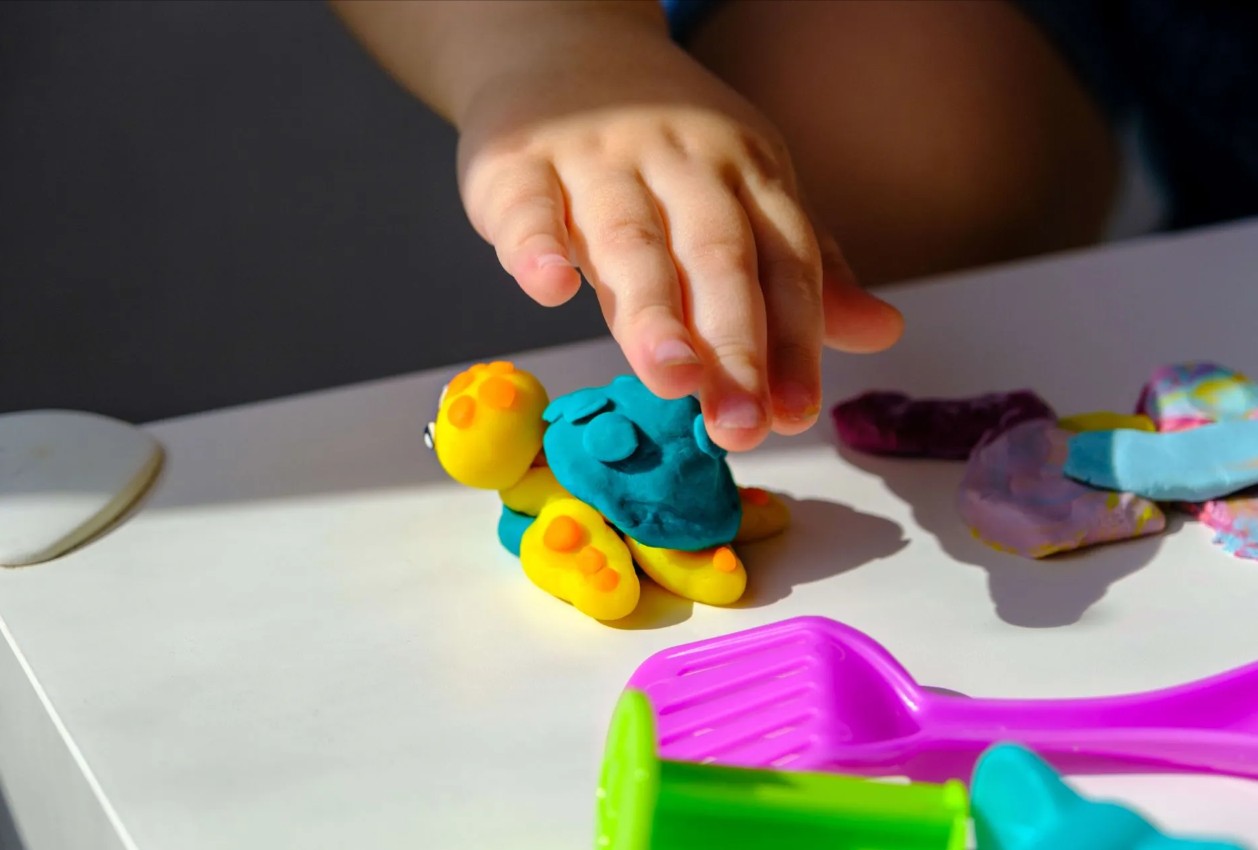
Create with salt dough or modelling dough

Make animals, food shapes or imaginary characters. The material must not be eaten; supervise young children closely because of the choking risk.

Dress up and act out a story

Choose roles, invent a short story and use everyday objects as props. Clothes must not restrict vision or movement.

Choose a suitable board game

Check the age recommendation, explain the rules in small steps and start with a practice round. Winning and losing are both part of playing.

Short on time

10-minute ideas

Copy animal movements

One child names an animal and everyone moves like it: slowly like a tortoise or hopping like a frog. All you need is a clear, safe space.

‘I spy with my little eye’

Choose a visible object and name its colour. Let the child guess, then choose an object themselves.

Test paper aeroplanes

Fold a simple aeroplane and test it in a clear space without breakable objects. Older children can compare flight distances.

Decorate a fruit plate

Use only fruit the children are allowed to eat, wash it and cut it appropriately for their age. Let the child arrange a face or colour pattern; check allergies beforehand.

Please take care: Check craft materials, food and toys for age suitability, allergies and choking hazards. Water activities require close, uninterrupted supervision.
Back to the compass ↑
Babies and toddlers

Care for little ones with calm and closeness

You do not have to master new routines immediately. Ask the parents to demonstrate changing nappies, feeding and safe carrying. Practise together and keep asking questions until you feel confident.

An au pair caring attentively for children
Important: Only give medicine with clear, appropriate dosage and administration instructions; seek medical advice if anything is unclear. Never shake a baby. If you feel overwhelmed, place the baby safely on their back in their cot and get support immediately.
Never alone on a changing table, sofa, bed or in the bath
Sleep On their back, on a firm, flat mattress, with a sleeping bag rather than pillows or cot bumpers
Temperature Around 18 °C is recommended for the sleeping room; avoid overheating
Baby monitor An extra aid — not a replacement for checking in person
Change nappies safely

First have a clean nappy, the agreed wipes and a waste bin within reach. Wash your hands. Ask the parents to show you the entire routine before changing the baby alone.

Always keep one hand on the baby on a raised changing surface. If you need to fetch something, take the baby with you or put them somewhere safe first. Even a baby who could not roll yesterday may suddenly make a new movement.

Clean gently from front to back and only use care products as agreed. Fasten the fresh nappy snugly without making it too tight. Tell the parents about sore-looking skin, unusual stools or pain.

Put the nappy in the designated bin, clean the changing surface following the family’s routine and wash your hands again. Never leave a baby alone on a sofa or adult bed while tidying up.

Bottles and feeding

Ask the parents to show you what the baby is fed and exactly how to prepare it. For powdered formula, measure water and powder according to the manufacturer’s instructions rather than guessing. Clean hands, a clean bottle and a clean teat are essential every time.

Only warm feeds using the method explained by the parents. Microwaves can create uneven hot spots. Check the temperature before offering the bottle and hold the baby securely in your arms while feeding.

Propping up a bottle does not replace your attention. Take breaks in response to the baby’s signals and do not force them to finish. Discard leftover feeds according to the preparation instructions rather than simply saving them for the next meal.

If the baby chokes, seems unusually sleepy or is not drinking as usual, inform the parents and seek medical help when needed. For breathing difficulties, call 112.

Understand the signals

Crying can mean hunger, tiredness, a need for closeness, a dirty nappy, pain or overstimulation. Stay calm, check the agreed routine and call the parents if you are unsure or the behaviour is unusual.

Safe sleep
  • During the first year, put the baby on their back to sleep.
  • Use a firm, flat mattress; keep the head and face uncovered.
  • No pillows, cot bumpers, sheepskins, heating pads, loose cords or thick blankets.
  • Keep the sleeping environment smoke-free and avoid overheating.
  • Follow the parents’ individual sleep routine as long as it follows safe recommendations.
Carrying, stairs and pushchairs
  • Ask the parents to show you exactly how their baby carrier works. Practise with a parent first and keep asking until you know how to position the child correctly and secure every fastening.
  • Use the handrail on stairs; do not carry extra objects that prevent a secure grip.
  • Use the pushchair straps and apply the brake whenever it is stationary.
  • Never leave a baby alone in a car — not even for a few minutes.
For breathing problems, unconsciousness, a seizure, serious injury or immediate danger, call 112. The emergency operator will explain what to do until help arrives.
↑ Back to the compass
Stage 6 · Understanding the household

Get to know appliances — use them safely

Every appliance works a little differently. Ask your host family for a calm demonstration and only photograph the correct standard programme with permission.

Using the washing machine in 8 steps
  1. Read the care label in each item of clothing. A number inside the wash-tub symbol, such as 30, means the maximum permitted washing temperature in degrees Celsius. A crossed-out tub means the item must not be washed normally with water. Ask someone to explain unfamiliar symbols.
  2. Sort laundry according to the family’s rules, for example separating light and dark colours. Wool and delicate fabrics often need their own programme. New, strongly coloured clothes may release dye and should not be added to white laundry without asking.
  3. Empty all pockets and remove tissues, coins and toys. Close zips and put delicate items in a suitable laundry bag if that is the family’s routine.
  4. Place laundry loosely in the drum. The permitted load depends on the programme: a wool cycle often takes much less than a cotton cycle. Do not keep stuffing clothes in until the door barely closes.
  5. Ask which detergent, compartment and dose to use. The amount depends on the laundry load, dirt and water hardness, among other things. More detergent does not automatically clean better and can leave residue. Keep laundry capsules out of children’s reach.
  6. Choose the appropriate programme and check the temperature and spin speed before starting. A blouse labelled 30 degrees must not go into a hot towel wash. Ask before starting if anything is unclear.
  7. Remove laundry promptly after the programme ends. Shake it out gently and hang it with space for air to circulate. Only tumble-dry suitable fabrics; ask especially about wool and delicate clothes.
  8. Clean and dry the machine as required by its manual and the family. A door left open for drying must not become an unsupervised play opportunity for small children. Report water leaks, unusual noises or error messages immediately.
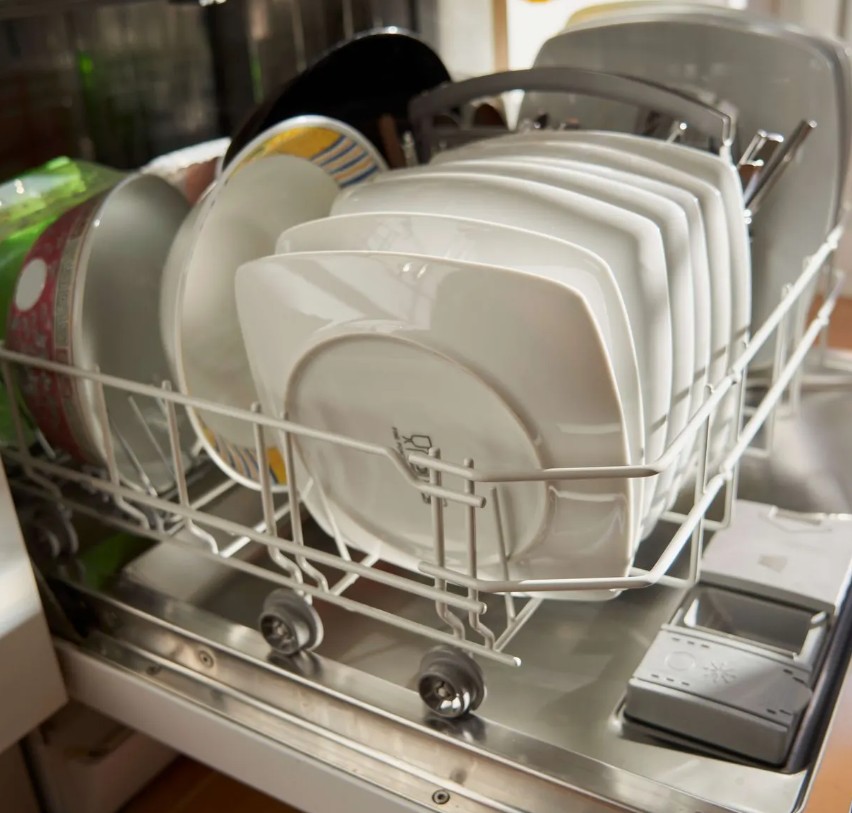
Load the dishwasher correctly

Scrape large food leftovers into the appropriate bin. Position plates and bowls so the water jets can reach dirty surfaces. Glasses must be stable and nothing should block the rotating spray arm. Gently turn it by hand before starting if you have been shown how.

Wooden boards, delicate glasses and some pans or plastics are not dishwasher-safe. Ask if unsure. Load sharp knives so nobody can cut themselves when reaching in; follow the instructions for that cutlery basket.

Only use the designated dishwasher detergent. Ordinary washing-up liquid can create excessive foam and force water out of the machine. Keep tablets away from children. Ask which compartment and programme to use.

Open carefully after the cycle: hot steam may escape. Let dishes cool enough, then unload the lower basket first so water from cups above does not drip onto dry dishes.

Tumble dryer, iron and vacuum cleaner

Only tumble-dry suitable fabrics and clean the lint filter as instructed. Never leave an iron unattended. Use the correct vacuum attachment and do not vacuum wet surfaces.

Typical tasks

Tidying the children’s room together, children’s laundry, setting the table, dishes and light tasks in shared rooms.

Not typical

Deep cleaning, heavy gardening, caring for relatives, working in the family business or regularly doing jobs for other households.

If you are unsure

Do not experiment. Stop the appliance, ask the family and report damage honestly straight away.

↑ Back to the Germany Compass
Hygiene, ventilation and your home

Keep your home comfortable and healthy

Cleanliness can mean different things in different families. Ask how the bathroom, kitchen and your room should look after use. Ask kindly when a habit is new to you.

Why ventilation matters and how mould develops

Sleeping, showering, cooking and drying laundry release moisture into indoor air. When moist air meets a cold wall or window, water can collect there. If the area stays damp, mould may grow. It often appears as dark, green or black spots; sometimes the room smells musty.

Mould can irritate the airways and affect health. Open windows fully for a few minutes several times a day, especially after sleeping, showering or cooking. Leaving a window slightly tilted exchanges air more slowly and can cool the wall.

Only dry wet laundry in your room if your host family permits it and has explained how to ventilate afterwards. Tell the family immediately if you notice dampness, a musty smell or dark spots. Do not clean or paint over the area on your own.

What does ‘leave the bathroom and toilet clean’ mean?

Flush after using the toilet and check that the seat and surrounding area are clean. Remove visible toothpaste or hair from the basin as the family has shown you. Spread out wet towels so they can dry and ventilate after showering.

Wet wipes, sanitary products, nappies and cotton buds must not go into the toilet because they can block pipes. Ask which bin to use. Wash your hands thoroughly with soap and water after using the toilet, before preparing food and after changing nappies.

Using toilets in Germany

Sit on the toilet so urine and stool go into the bowl. Afterwards, use toilet paper to clean yourself. Ordinary used toilet paper goes into the toilet and is flushed away. Wet wipes, sanitary pads, tampons, nappies and other hygiene products go in the bin because they can block pipes.

Afterwards, check that the bowl and seat are clean. Use the toilet brush if needed, as the family has shown you. Always wash your hands thoroughly with soap and water afterwards — whether you have urinated or had a bowel movement.

If you would also like to clean yourself with water, discuss a hygienic option with the family. Do not stand on the toilet seat and keep the floor dry. Water and toilet paper can be used together; hygiene habits differ.

Showers, deodorant and towels

Regular personal hygiene matters when living closely with a family. Many people in Germany shower daily or according to exercise, weather and personal needs. Talk about the family’s habits and suitable times for using the bathroom.

An everyday shower does not need to take long. Around three to five minutes is often enough: wet your body and hair, turn off the water briefly while soaping up if possible, rinse away soap or shower gel and dry yourself well. Very long showers use a lot of hot water and can make the bathroom very humid.

Use deodorant as needed and put on clean clothes. Hang up your towel straight away so it can dry completely. Remove hair from the shower or drain following the family’s routine and ventilate afterwards so moisture can escape and mould is less likely to form.

Cleaning products

Ask the family to show you the correct product and amount for each surface. Bathroom cleaner can damage natural stone, and the same cloth should not be used for both the toilet and kitchen table. Keep cloths clearly separate and wash or replace them according to the agreed routine.

Never mix different cleaners or pour them into drinks bottles. Store them out of children’s reach and follow label instructions about gloves and ventilation. In an accident, keep the packaging for the poison information service or emergency team.

↑ Back to the Germany Compass
Stage 7 · Food, recycling and deposits

How everyday life works

Healthy food in everyday German family lifeDifferent bins for separating waste

Eating together

Ask about normal mealtimes and what the children may eat. Discuss allergies, religious requirements and personal preferences specifically. You can also say what you do not eat. Put perishable groceries in the fridge promptly; keep raw animal products separate from ready-to-eat food during preparation.

Separate waste correctly

Recycling matters to many people in Germany because valuable materials can be reused. Rules vary locally, so ask which bins belong to your home. Paper and cardboard commonly go in the paper bin, plastic and metal packaging in the yellow bin or yellow bag, food scraps in organic waste and non-recyclable rubbish in general waste. Glass usually goes into collection containers separated by colour.

Find an illustrated guide to sorting waste here. Always follow the local rules that apply to your host family.

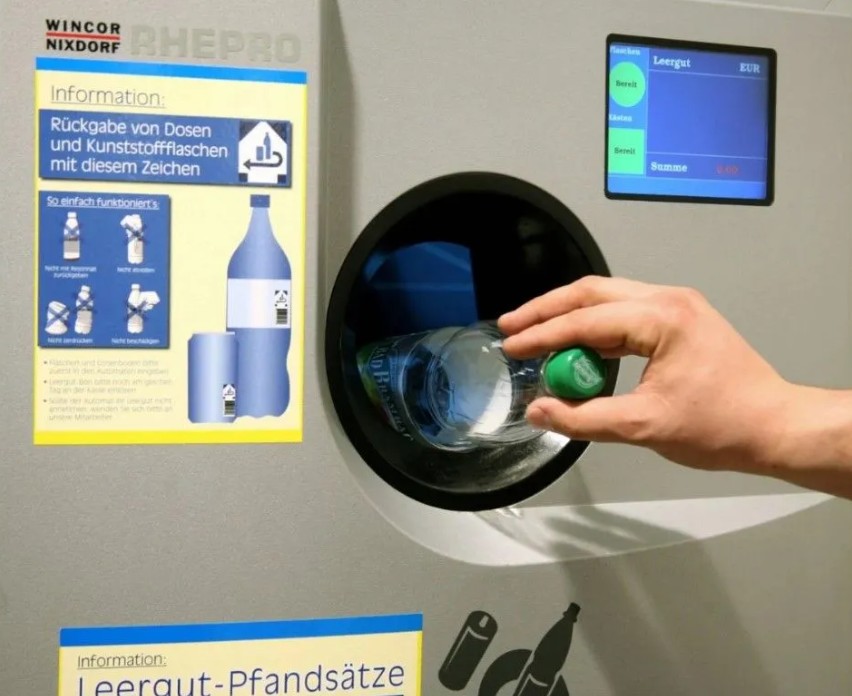
Return deposit containers

Put bottles and cans bearing a deposit symbol into the return machine and redeem the receipt at the checkout.

Returning empty deposit bottles

Not in household rubbish

Batteries, electrical appliances, chemicals and medicines require separate disposal. Ask your host family about local rules.

↑ Back to the Germany Compass
Shopping step by step

Your first shopping trip does not have to be a puzzle

From the shopping list to the checkout

First ask exactly what is needed: for example, ‘500 g plain unsweetened yoghurt’ rather than just ‘yoghurt’. Agree on the budget, payment method and whether substitutions are allowed if something is unavailable. Bring a bag; shopping bags often cost extra.

Loose fruit and vegetables are weighed either on a scale in the shop or at the checkout. Read the signs or ask: ‘Muss ich die Äpfel selbst wiegen?’ — ‘Do I need to weigh the apples myself?’ A price ‘pro kg’ means per kilogram, not per individual item.

At the checkout, put your groceries on the belt and place a divider after them. Pay when the total is announced or displayed. Keep the receipt when shopping for the family and return it together with the change.

Know the difference between best-before and use-by dates

‘Mindestens haltbar bis’ means ‘best before’ and describes the expected quality of an unopened product stored correctly. It does not automatically mean the food is spoiled the following day. However, do not guess when preparing food for children; ask the parents if unsure.

‘Zu verbrauchen bis’ means ‘use by’ and appears on highly perishable foods. Do not eat them after that date. Instructions such as ‘keep refrigerated after opening’ also apply. Damaged packaging, mould or an unusual smell are reasons not to use a product.

The consumer advice centre explains the two types of date.

Returning deposits in practice

You pay an extra deposit when buying many drinks bottles and cans. A suitable return point refunds it. Leave the label and barcode in place and do not crush the container so the machine can recognise it.

Insert containers into the machine one at a time. When finished, press the button for the deposit receipt and take it to the checkout. Not every machine accepts every bottle; ask staff if one is rejected. Do not simply put deposit bottles in glass recycling containers.

Back to the compass ↑
Stage 5 · Experience Germany

Four seasons, many new experiences

The weather can change quickly. Good preparation protects you and the children — and makes every season more enjoyable.

Important: The months are only a guide. Germany has different regions and elevations. A spring day may start at 4 °C and reach 18 °C in the afternoon. Check the weather app each morning and ask the parents what clothes the children need.
Spring in Germany
🌷 Spring March to May · changeable weather and brighter days
often around 5–20 °C, depending on the region

After winter, days become longer. Plants blossom, rain is frequent and mornings can still be cold or even frosty. By the afternoon, it sometimes already feels warm.

What does ‘Zwiebellook’ mean?
It is not about onions as food. It means wearing several thin layers: for example, a vest or T-shirt, a jumper and a rain jacket on top. Take a layer off when it gets warm and put it back on when it gets cold.

Checklist before going outside

  • Check the weather and chance of rain
  • Bring a rain jacket, closed shoes and an umbrella if needed
  • Pack spare trousers and socks for young children
  • In sunshine, use a hat and sun protection according to the family’s rules
  • For hay fever, clarify which symptoms and medicines matter

With children

Puddles, wet playground equipment and cold wind are easy to underestimate. Check clothes and shoes after playing and remove wet items promptly. Never give allergy medicine without clear instructions from the parents.

Summer and sun protection in Germany
☀️ Summer June to August · long days and possible heat
often around 18–30 °C, with hot days above 30 °C possible

Summer evenings stay light for a long time. Some days are pleasant; others are very hot and humid. Thunderstorms can develop quickly. Homes often have no air conditioning and can become very warm.

Warm-weather checklist

  • Fill water bottles and offer regular drinking breaks
  • Pack light clothes and a sun hat
  • Use sunscreen as agreed with the parents
  • Spend the hottest midday hours in the shade or indoors where possible
  • Check slides, metal surfaces and car seats for heat before use
  • During thunderstorms, leave the water, open fields and isolated trees

Take warning signs seriously

Extreme tiredness, headache, dizziness, nausea or unusually red or pale skin can indicate heat-related problems. Move the child somewhere cool, inform the parents immediately and seek medical help in an emergency.

Never: Leave a child or animal in a parked car — not even briefly or with a window open.

Staying safe around water: pools, lakes and outdoor swimming pools

A trip to the water can be great fun. Before going, discuss with the parents where the children may swim and whether you can safely supervise them. Never leave children alone in or near water. Keep young children and non-swimmers within immediate reach so you can help straight away. Armbands and other swimming aids do not replace supervision — even in a shallow paddling pool.

Children who can already swim still need your attention: stay nearby and watch them continuously. Put your phone away; messages, photos and conversations must not distract you. If you need to leave, take the children with you or explicitly hand over supervision to a suitable adult. A lifeguard at an outdoor pool does not replace your own attention.

Important: drowning is often silent. A child in difficulty may be unable to call out or wave clearly. Do not wait for cries for help. In an emergency, get help immediately, alert the lifeguard and make sure someone calls 112.

DLRG: water safety tips for children

Autumn with rain and colourful leaves
🍂 Autumn September to November · wind, rain and early darkness
often around 5–18 °C, colder in late autumn

Early autumn can still be warm. Later, days shorten, roads get wet and leaves make paths slippery. Fog can reduce visibility. When the clocks change, it gets dark earlier in the afternoon.

Checklist for nursery and school journeys

  • Choose a waterproof jacket and sturdy, slip-resistant shoes
  • Use bright clothing, reflectors or a high-visibility vest in the dark
  • Allow extra time for wet or slippery routes
  • Check bicycle lights before riding and wear a helmet according to the family’s rules
  • Hang wet clothes up at home instead of leaving them damp in a backpack

Things to remember indoors

When the heating season begins, proper ventilation becomes important. Even in cold or wet weather, moist indoor air needs to escape regularly. Discuss exactly how to ventilate and heat the home with your host family.

Winter with snow and warm clothing
❄️ Winter December to February · cold, darkness, ice and sometimes snow
often around −5 to 8 °C, much colder or milder in some regions

In winter, daylight starts late and ends early. Snow does not stay everywhere, but even invisible black ice can make paths dangerous. Cold outdoor air and dry heated indoor air are unfamiliar to many au pairs.

How clothing layers work:
A dry layer close to your body helps keep you warm. Add a jumper or fleece. A windproof and preferably waterproof jacket protects you outside. Wear long trousers, warm socks, sturdy shoes, a hat and gloves too. Do not stay in wet clothes.

Checklist before going outside

  • Check temperature, wind and ice warnings
  • Wear a hat, gloves, warm socks and weatherproof shoes
  • Use reflectors or lights on dark routes
  • Walk slowly on icy paths, do not run and allow extra time
  • Bring spare gloves for children when there is snow
  • Remove wet things when you get home and dry them

Heating and your home

Do not turn the heating off completely without checking. Keep furniture and clothes away from directly in front of radiators. Ventilate briefly several times with windows fully open; a constantly tilted window cools walls and often exchanges air too slowly.

Frozen lakes: stay on the shore first

A frozen lake may look solid but still be extremely dangerous. Ice is not equally thick everywhere and can break suddenly. Never decide on your own to walk onto a frozen lake or pond — even if other people are already walking or skating on it.

For your outing, natural ice is only an option if the responsible local authority has explicitly declared it open for that activity. Discuss the trip with the parents beforehand and only take the children onto an officially opened ice surface with the parents present. Their permission or presence alone does not make the ice safe. Without clear official approval, stay on the shore. A supervised ice rink is a lovely alternative; follow the operator’s instructions there too.

DLRG: why official approval matters

↑ Back to the Germany Compass
Culture in Germany

Guidance, not stereotypes

There is no single ‘German family’. These tips explain common expectations — discuss your own household’s rules together.

Everyday life together in a German host family

Punctuality

Being punctual is very important in Germany. ‘We meet at 8 o’clock’ normally means you are ready at the agreed place by 8 at the latest. Plan to arrive five to ten minutes early if possible and wait briefly. If your bus or train is cancelled and you will be late, tell the family as early as possible and give a realistic new arrival time.

Direct communication

A clear ‘no’ or a matter-of-fact correction can be normal. At the same time, you can expect respectful communication.

Quiet hours

Follow house rules and local regulations. Loud music, vacuuming or parties can be a problem in the evening, at night and on Sundays.

Privacy

Personal spaces and information are often carefully protected. Always ask before entering, borrowing, photographing or posting.

Planning

Many families plan appointments ahead. Add working hours, your language course and personal appointments to a shared calendar.

Taking initiative

Thinking ahead is appreciated — but check first when it involves children, safety, money or important decisions.

Stay organised

Everyday essentials

Travelling by bus and train

Clarify which ticket you need, whether it is personal and where it is valid. Check your connection and route home before travelling. When accompanying children, always follow the host family’s traffic and safety rules.

Travelling by bus and train with the Deutschlandticket
Documents

Record deadlines

Keep your passport, residence permit, insurance and contract secure. Get help well before anything expires.

Getting around

Understand your ticket

Check which ticket is valid and whether it needs activating before travel. Transport children only as agreed with the family.

Health

Know your insurance

Save your insurance details and important numbers. Tell the family early if you are ill and arrange medical help.

Language

Practise regularly

Make time for your language course, ask questions in everyday life and write down new words. Mistakes are part of learning.

Data protection: Send passports, visas, bank details or insurance documents only to known, authorised recipients. Do not share access codes. Ask the agency first about suspicious messages.
↑ Back to the Germany Compass
Try out everyday culture

Small habits that help you find your way

‘Du’ or ‘Sie’ — how should I address someone?

You will normally use the informal ‘du’ with your host family. With unfamiliar adults, at a medical practice or at a public authority, the formal ‘Sie’ is a polite starting point. Simply ask: ‘Sollen wir du oder Sie sagen?’ — ‘Shall we use du or Sie?’ A language mistake is no reason to avoid a conversation.

A friendly ‘Guten Morgen’ (good morning), ‘Bitte’ (please) and ‘Danke’ (thank you) help in everyday life. If you do not understand, say: ‘Könnten Sie das bitte langsamer wiederholen?’ — ‘Could you repeat that more slowly, please?’ An honest question helps more than nodding when an important instruction is unclear.

Invitations and punctuality

For work, collecting children or an appointment, be ready at the agreed time. Plan to be nearby five to ten minutes early. For a private invitation, however, do not ring the doorbell very early without warning; wait until the agreed time.

When invited, ask whether to bring anything and whether shoes should be removed. A small thank-you is nice; an expensive gift is unnecessary. Cancel in good time if you cannot come; simply staying away leaves others waiting unnecessarily.

Celebrations, birthdays and Sundays

Easter in spring and Christmas in winter feature in many calendars, including those of people who are not religious. Some families colour eggs, others decorate a tree and others do not celebrate these festivals at all. Ask about your family’s own traditions and share yours too.

Children’s birthday guests and activities are usually planned ahead. Ask whether you should help prepare and when this counts as working time. Many shops close on Sundays and public holidays, so buy essential groceries beforehand. Public holidays differ between federal states.

Letters, appointments and unfamiliar forms

Open your own post regularly. Photograph or note any deadline and ask for help early if you do not understand a letter. Do not ignore letters from insurers, banks or authorities because you feel unsure; some replies must arrive on time.

Do not sign anything you do not understand. You could say: ‘Ich möchte den Text erst verstehen. Ich lasse ihn mir erklären und melde mich danach.’ — ‘I would like to understand the text first. I will ask someone to explain it and then get back to you.’ Only send passport copies and bank details to authorised recipients through an agreed secure channel.

Missed the bus or your phone is flat — now what?

Also keep the host family’s address and important telephone numbers on a small piece of paper. Before a trip, check the last connection home. Tickets may be restricted to a route, person or type of train; a local transport ticket is not automatically valid on every long-distance train.

If a bus is cancelled, go somewhere safe and tell the family you will be late. Keep the host children with you and arrange an alternative pickup. Do not get into an unfamiliar car because you are in a hurry. If your phone is flat, ask an official information desk for help making a call.

A little German every day

Write down three words you actually needed today, such as ‘Spülmittel’ (washing-up liquid), ‘Abholung’ (pickup) and ‘Handschuh’ (glove). Ask the family for an example sentence and use the word yourself at the next suitable moment. This connects the language to everyday life.

Library books, a language exchange and your course provide more practice. Ask for friendly corrections, but not after every word during an important conversation. You do not need perfect German to be attentive, reliable and a valued part of the family.

Back to the compass ↑
30 recipes · Clearly explained

Cook together. Step by step.

Choose a category and open a recipe. You will find exact quantities, the equipment you need and every step — even if this is your first time cooking.

Fresh ingredients for your family kitchen
New to cooking? Start here.

Measure, prepare and work safely

In these recipes, g means grams, ml means millilitres, tbsp means tablespoon and tsp means teaspoon. Use scales, a measuring jug and measuring spoons where possible: a standard tablespoon holds 15 ml and a teaspoon 5 ml. A level spoonful is flat on top, not heaped. For powders and flour, weighing is more accurate than using an ordinary household spoon.

Read the whole recipe before starting. Prepare all ingredients and equipment, wash your hands and fresh fruit or vegetables, and set up a stable work area. A vegetable peeler removes a thin layer of skin; a grater makes small shreds. Ask someone to demonstrate both and keep your fingers away from the cutting edges.

To crack an egg, gently tap the shell against a firm surface, open it over a small bowl and let the white and yolk fall in. Do not cook the shell. Remove any shell pieces with a clean spoon and wash your hands after touching raw egg. Do not taste raw flour or uncooked batter.

Conventional top/bottom heat heats from above and below. Fan mode circulates hot air and often needs a lower temperature. Choose just one of the settings given. Use dry oven gloves to remove dishes, put hot trays down safely and turn pan handles away from the front edge of the hob.

These are general family meals, not infant food. Portion needs and safe piece sizes depend on age and development. Check allergies, intolerances and religious or personal food rules before substituting ingredients.

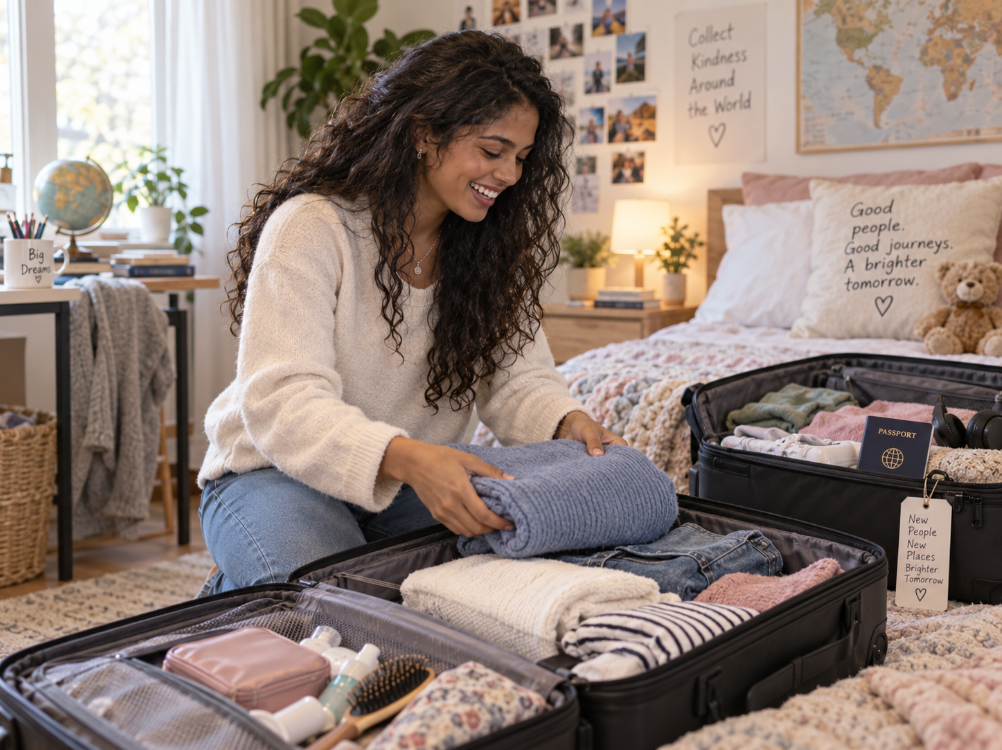
Get to know foods: quark, oats and more

Oats and wholegrains

Rolled oats are flattened cereal flakes. Fine oats soften quickly in porridge. Wholemeal bread and wholewheat pasta contain more parts of the grain; they may taste different and keep you full longer. Whole hard grains are not suitable for every young child.

Yoghurt, quark and alternatives

Plain yoghurt is unsweetened; fruit yoghurt often contains additional ingredients. Quark is a thicker, mild dairy product that can be mixed into a dip. Plant-based alternatives differ in protein and added nutrients. Do not swap them indiscriminately for children.

Lentils, beans and tofu

Pulses and tofu add plant-based protein to meals. Canned beans are already cooked; dried beans need different preparation and thorough cooking. Tofu is often made from soya. Check allergies even with familiar-looking substitutes.

Fresh or frozen?

Unseasoned frozen vegetables are a useful store-cupboard staple. Follow the cooking instructions on the packaging. Do not use uncooked frozen berries in cold recipes for children. Here we use washed fresh fruit for fruit salad and yoghurt cups.

Breakfast

Breakfast

Apple porridge 15 minutes · 2 small portions

Equipment: Saucepan, wooden spoon, grater and scales.

Ingredients

  • 80 g fine rolled oats
  • 300 ml milk or an agreed unsweetened alternative
  • 1 apple (about 150 g)
  • 50 ml water if needed

Step by step

  1. Wash the apple. Cut it into quarters on a board and remove the hard core. Finely grate the flesh, keeping fingers away from the grating surface.
  2. Put oats and milk into a cold saucepan. Warm over medium heat, stirring right to the bottom so nothing sticks.
  3. When small bubbles appear, turn the heat low. Stir in the apple and simmer gently for about 5 minutes.
  4. If the porridge is very thick, add water a tablespoon at a time. The oats should be soft and easy to mash.
  5. Turn off the hob, divide between two bowls and let cool. Use a clean spoon to check that it is a comfortable eating temperature.

Cooking with children: The child can add oats to the cold pan and practise the word for apple with you.

Banana and oat pancakes 25 minutes · 8 small pancakes

Equipment: Bowl, fork, non-stick frying pan and spatula.

Ingredients

  • 1 ripe banana
  • 2 eggs
  • 80 g fine rolled oats
  • 2 tsp rapeseed oil

Step by step

  1. Peel the banana and mash it in a bowl with a fork.
  2. Crack each egg into a separate small bowl first, remove shell pieces with a clean spoon and add the egg to the mashed banana. Wash your hands afterwards.
  3. Stir in the oats and leave the batter for 5 minutes. Do not taste raw batter.
  4. Warm 1 tsp oil over medium heat. Add four small spoonfuls of batter with space between them and flatten to about 5 mm thick.
  5. Cook each side for approximately 2–3 minutes. Reduce heat if they brown too quickly outside. Cut one open: no wet egg batter should remain inside.
  6. Cook the second batch with the remaining oil. Put the pan down safely and let the pancakes cool before eating.

Cooking with children: The child can mash the banana with a fork. You handle the hob and pan.

Apple overnight oats 10 minutes + 6 hours chilling · 2 portions

Equipment: 2 lidded containers, grater and measuring jug.

Ingredients

  • 80 g fine rolled oats
  • 200 ml milk
  • 100 g plain yoghurt
  • 1 apple

Step by step

  1. Wash the apple, remove its core and seeds and grate it finely.
  2. Mix oats, milk, yoghurt and apple in a clean bowl.
  3. Divide between two clean containers. Close them and immediately refrigerate for at least 6 hours.
  4. Stir the next morning. Once the oats are soft, serve cold; stir in a little milk if needed.
  5. Prepare only enough for the following morning and keep chilled until eating. Use only fresh dairy products suitable for the child.

Cooking with children: The child can divide the oats between the containers and help close the lids.

Berry yoghurt cups 15 minutes · 2 portions

Equipment: Sieve, bowl, fork and 2 cups.

Ingredients

  • 300 g plain yoghurt
  • 150 g fresh berries
  • 40 g fine rolled oats

Step by step

  1. Gently wash fresh berries under running water and remove stalks and damaged fruit. Do not use uncooked frozen berries in this cold version.
  2. Mash round berries with a fork for small children. Cut strawberries into pieces suited to their chewing ability.
  3. Mix yoghurt with oats and leave for 5 minutes to soften the oats.
  4. Layer yoghurt and berries in two shatterproof cups. Do not add nuts or other hard decorations.
  5. Serve immediately or cover and refrigerate until eating.

Cooking with children: The child can mash soft fruit and add the layers themselves.

Vegetable scrambled eggs with bread 25 minutes · 3 portions

Equipment: Frying pan, bowl, chopping board and spatula.

Ingredients

  • 6 eggs
  • 1 small courgette (about 200 g)
  • 1 small pepper
  • 1 tbsp rapeseed oil
  • 3 slices of bread

Step by step

  1. Wash the courgette and pepper. Remove stem ends and pepper seeds, then cut the vegetables into roughly 5 mm cubes.
  2. Heat the oil over medium heat and cook the vegetables for about 8 minutes, stirring regularly. They should soften, not burn.
  3. Crack the eggs individually into a small bowl, remove shell pieces and then whisk them together. Wash your hands after touching raw egg.
  4. Pour the eggs over the vegetables. Slowly push the mixture from the edge towards the centre with a spatula.
  5. Cook thoroughly until no liquid egg remains, including between the vegetables. This usually takes 4–6 minutes; hob power varies.
  6. Turn off the hob and serve slightly cooled with bread cut into suitable pieces.

Cooking with children: The child can arrange the bread on plates. You handle the raw eggs.

Hot meals

For lunch and dinner

Oven-baked potato and vegetable fritters 50 minutes · 10 fritters / about 3 portions

Equipment: Grater, bowl, baking tray, baking paper and oven gloves.

Ingredients

  • 500 g potatoes
  • 200 g carrots
  • 1 egg
  • 40 g fine rolled oats
  • 1 tbsp rapeseed oil

Step by step

  1. Preheat the oven to 200 °C conventional or 180 °C fan. Line a cold baking tray with baking paper.
  2. Wash and peel potatoes and carrots. Coarsely grate them. Do not hold small remaining pieces right against the sharp grater.
  3. With clean hands, squeeze the grated vegetables firmly over a sieve. Too much water would make the fritters soft and fragile.
  4. Crack the egg into a separate bowl, remove any shell pieces and mix with the vegetables, oats and oil. Wash your hands afterwards.
  5. Place ten mounds on the tray and flatten to about 1 cm thick. Leave some space between them.
  6. Bake on the middle shelf for about 25–30 minutes. Carefully turn them with a spatula after 15 minutes.
  7. Cut one fritter open: the grated potato must be soft and the centre cooked through. Bake for another 5 minutes if needed.
  8. Remove the tray with dry oven gloves and let the fritters cool before eating.

Cooking with children: The child can weigh the oats and count the washed vegetables.

Pasta with vegetable and tomato sauce 35 minutes · 4 portions

Equipment: 2 saucepans, colander, knife and chopping board.

Ingredients

  • 300 g pasta
  • 1 carrot (about 100 g)
  • 1 small courgette (about 200 g)
  • 500 g passata
  • 1 tbsp rapeseed oil
  • 100 ml water
  • 1 tsp dried oregano, if agreed

Step by step

  1. Wash the vegetables. Peel the carrot, trim the courgette and cut everything into very small pieces, about 5 mm.
  2. Warm the oil in the smaller saucepan. Cook the vegetables over medium heat for 5 minutes, stirring regularly.
  3. Add tomatoes, 100 ml water and the agreed herbs. Let the sauce bubble gently over low heat for 15–20 minutes.
  4. In the second pan, boil the amount of water recommended on the pasta packet. Add the pasta and set a timer according to the packet.
  5. Test a vegetable piece: it should mash easily. Cook the sauce longer if necessary; a splash of water helps prevent sticking.
  6. Slowly drain pasta into a stable colander in the empty sink. Keep children away while doing this. Mix pasta and sauce and let a child’s portion cool before serving.

Cooking with children: The child can weigh dry pasta and name the ingredients.

Mild vegetable and rice pan 35 minutes · 4 portions

Equipment: Saucepan, frying pan with lid and measuring jug.

Ingredients

  • 250 g long-grain rice
  • Water as stated on the rice packet
  • 150 g carrots
  • 1 pepper
  • 150 g frozen peas
  • 200 g plain tofu
  • 1 tbsp rapeseed oil
  • 100 ml water for the vegetables

Step by step

  1. Cook rice using the water quantity and time on its packet. Different types need different amounts; do not simply guess.
  2. Wash the pepper and remove its stem and seeds. Peel the washed carrots. Cut both into small cubes.
  3. Cut tofu into small cubes on a clean board. First check that everyone may eat soya.
  4. Heat oil over medium heat. Cook carrots for 4 minutes, then add pepper, peas, tofu and 100 ml water.
  5. Cover and cook for 10–12 minutes. Stir occasionally and check that vegetables are soft and tofu is hot throughout.
  6. Mix in the cooked rice and serve after cooling briefly. Cool leftover rice quickly in a shallow container and refrigerate; do not leave it at room temperature for hours.

Cooking with children: The child can measure uncooked rice and list the vegetable colours.

Mashed potatoes with peas and carrots 40 minutes · 4 portions

Equipment: 2 saucepans, colander and potato masher.

Ingredients

  • 800 g potatoes
  • 200 g carrots
  • 150 g frozen peas
  • 150 ml milk
  • 15 g butter

Step by step

  1. Wash and peel potatoes and carrots. Cut potatoes into roughly 3 cm pieces and carrots into roughly 1 cm pieces.
  2. Put potatoes in a pan and just cover with water. Bring to the boil, then simmer over low heat for about 20 minutes.
  3. Cook carrots in a second pan with a little water for about 10 minutes. Add peas and cook for another 5 minutes or according to the packet.
  4. Check with a fork that potatoes and vegetables mash easily. Carefully drain the water.
  5. Warm the milk briefly without boiling hard. Add milk and butter to the potatoes and mash. Do not use a hand blender, which can make the mash gluey.
  6. Serve vegetables beside or in the mash. Mash peas for young children according to their chewing ability. Check the eating temperature.

Cooking with children: The child can mash cooled, soft potatoes with a fork.

Broccoli pasta bake 45 minutes · 4 portions

Equipment: Saucepan, colander, ovenproof dish and oven gloves.

Ingredients

  • 300 g pasta
  • 400 g broccoli
  • 200 ml cooking cream
  • 150 ml milk
  • 100 g grated cheese

Step by step

  1. Preheat the oven to 180 °C conventional or 160 °C fan.
  2. Wash broccoli, divide into small florets and peel the thick stalk. Chop the stalk into small pieces.
  3. Cook pasta for about 2 minutes less than the packet says. Add broccoli for the last 5 minutes; cook it separately if the pasta cooks very quickly.
  4. Drain carefully and spread in the ovenproof dish. Mix cream and milk and pour over.
  5. Sprinkle cheese evenly on top. Bake on the middle shelf for about 20–25 minutes until the sauce bubbles and the broccoli and pasta are soft.
  6. Remove with dry oven gloves. Leave for at least a few minutes and check each child’s portion for hot spots.

Cooking with children: The child can sprinkle cheese over the still-cold dish.

Mild lentil bolognese 40 minutes · 4 portions

Equipment: 2 saucepans, fine sieve and wooden spoon.

Ingredients

  • 150 g red lentils
  • 300 g pasta
  • 500 g passata
  • 1 carrot
  • 1 tbsp oil
  • 400 ml water

Step by step

  1. Rinse red lentils in a fine sieve. Wash and peel the carrot and chop very finely.
  2. Warm oil in a pan and cook the carrot over medium heat for 5 minutes.
  3. Add lentils, tomatoes and 400 ml water. Bring briefly to the boil, then turn the heat low.
  4. Simmer gently for 20–25 minutes. Stir frequently because red lentils stick easily. Add water a tablespoon at a time if needed.
  5. Meanwhile, cook pasta according to its packet and drain carefully.
  6. Check that lentils are completely soft with no hard centres. Serve sauce with pasta and let the child’s portion cool.

Cooking with children: The child can weigh dry pasta. Only taste lentils once fully cooked.

Mild bean and sweetcorn tacos 25 minutes · 4 portions / 8 small tortillas

Equipment: Sieve, saucepan, chopping board and fork.

Ingredients

  • 8 small soft tortillas
  • 240 g canned kidney beans, drained
  • 140 g canned sweetcorn, drained
  • 200 g canned chopped tomatoes
  • 150 g plain yoghurt
  • 4 lettuce leaves

Step by step

  1. Drain the already-cooked canned beans and sweetcorn into a sieve, rinse with water and leave to drain. Do not directly substitute raw dried beans.
  2. Put beans, sweetcorn and tomatoes in a saucepan. Warm over medium heat and simmer for about 10 minutes, stirring.
  3. Wash lettuce leaves and tear into small pieces. Mash beans with a fork for small children.
  4. Warm tortillas according to the packet. They should remain flexible, not become hard.
  5. Spread a little yoghurt on each tortilla and add a small amount of lukewarm bean filling and lettuce.
  6. Fold in the sides and cut the tacos into pieces the child can comfortably eat.

Cooking with children: The child can fill their own taco after you check the temperature.

Sweet potato wedges with herb dip 45 minutes · 3 portions

Equipment: Baking tray, baking paper, knife and bowl.

Ingredients

  • 700 g sweet potatoes
  • 1 tbsp rapeseed oil
  • 200 g plain yoghurt
  • 1 tbsp chopped chives or parsley

Step by step

  1. Preheat the oven to 200 °C conventional or 180 °C fan and line a tray with baking paper.
  2. Wash and peel sweet potatoes. On a stable board, cut into wedges about 1.5 cm thick.
  3. Toss wedges with oil in a bowl. Spread side by side on the tray; overlapping pieces cook unevenly.
  4. Bake for about 25–30 minutes, turning halfway through with a spatula.
  5. Wash fresh herbs, chop finely and stir into yoghurt. Refrigerate the dip until serving.
  6. Check with a fork that the wedges are soft inside. Remove using oven gloves and serve slightly cooled with the dip.

Cooking with children: The child can stir herbs into cold yoghurt.

Mild vegetable curry with rice 40 minutes · 4 portions

Equipment: Saucepan, deep frying pan and measuring jug.

Ingredients

  • 250 g rice
  • 300 g carrots
  • 300 g cauliflower
  • 200 g frozen peas
  • 400 ml coconut milk
  • 150 ml water
  • 1 tbsp oil
  • ½ tsp mild curry powder, only if agreed

Step by step

  1. Cook rice with the water quantity and cooking time given on its packet.
  2. Wash and peel carrots and slice thinly. Wash cauliflower and divide into small florets.
  3. Warm oil and cook carrots and cauliflower for 3 minutes over medium heat.
  4. Add coconut milk, 150 ml water and the mild curry powder if agreed. Some blends are spicy; check before using.
  5. Simmer gently for 12 minutes. Add peas and cook for another 5–8 minutes until all vegetable pieces are soft.
  6. Serve with rice. Taste a small, cooled amount first and do not give children an unexpectedly spicy portion.

Cooking with children: The child can wash cauliflower florets in cold water.

Oven-baked fish with potatoes 50 minutes · 4 portions

Equipment: Baking tray, baking paper, knife, fork and food thermometer.

Ingredients

  • 600 g potatoes
  • 500 g thawed skinless fish fillets
  • 300 g carrots
  • 2 tbsp oil
  • 2 tbsp lemon juice

Step by step

  1. Preheat to 200 °C conventional or 180 °C fan. Wash and peel potatoes and carrots and cut both into pieces about 1 cm thick.
  2. Mix vegetables with 1 tbsp oil and spread on the lined tray. Bake for 20 minutes first.
  3. Carefully check fish for bones; even fillets sold as boneless may contain some. Use a separate board and wash hands and utensils afterwards.
  4. Place fish alongside the vegetables, brush with the remaining oil and lemon juice and bake for about another 15–20 minutes; thick pieces take longer.
  5. Use a suitable thermometer in the thickest piece to check that it reaches at least 70 °C for 2 minutes. Potatoes and carrots must break apart easily with a fork.
  6. Carefully break up the child’s portion again, remove any bones and let cool.

Cooking with children: The child can wash potatoes before you prepare the fish. Keep raw fish separate from the child’s work area.

Spinach and potato mash 35 minutes · 4 portions

Equipment: 2 saucepans, masher and colander.

Ingredients

  • 800 g potatoes
  • 300 g frozen leaf spinach
  • 150 ml milk
  • 15 g butter
  • 50 ml water

Step by step

  1. Wash and peel potatoes. Cut into roughly 3 cm pieces and just cover with water in a saucepan.
  2. Bring to the boil and simmer on low for about 20 minutes until a fork slides in easily.
  3. Separately heat spinach thoroughly with 50 ml water according to the packet. Stir regularly so it thaws and heats evenly.
  4. Carefully drain potatoes. Add milk and butter and mash.
  5. Chop long spinach leaves if necessary and stir the hot spinach into the mash. Check the temperature before serving.
  6. Prepare fresh whenever possible for young children. Cool leftovers promptly instead of keeping the pan warm for a long time.

Cooking with children: The child can count and weigh potatoes before peeling.

Quick bread-roll pizzas 25 minutes · 4 portions / 8 halves

Equipment: Baking tray, baking paper and knife.

Ingredients

  • 4 bread rolls
  • 200 g passata
  • 1 small pepper
  • 100 g canned sweetcorn, drained
  • 120 g grated cheese
  • ½ tsp oregano, if agreed

Step by step

  1. Preheat to 190 °C conventional or 170 °C fan and line a baking tray.
  2. Halve the rolls horizontally. Wash the pepper, remove seeds and stem and cut into very small cubes.
  3. Spread a thin layer of passata on each half. Season with a little oregano if agreed.
  4. Add pepper, sweetcorn and cheese and place the halves side by side on the tray.
  5. Bake for about 12–15 minutes until cheese melts and pepper pieces soften. If the edges become too dark, remove earlier and check the topping.
  6. Let the pizza rolls cool. Cheese stays hot longer than the bread surface, so check the topping too.

Cooking with children: The child can top their own roll half on a cold work surface.

Soups

Soups

Potato and carrot soup 40 minutes · 4 portions

Equipment: Large saucepan, masher or hand blender and measuring jug.

Ingredients

  • 500 g potatoes
  • 400 g carrots
  • 800 ml water
  • 1 tbsp rapeseed oil
  • Vegetable stock according to the packet dose for 800 ml; start sparingly for children

Step by step

  1. Wash and peel potatoes and carrots. Cut into pieces about 2 cm across.
  2. Warm oil in the pan and cook vegetables for 2 minutes while stirring.
  3. Add water and a little suitable stock. Bring to the boil and reduce the heat.
  4. Simmer gently with the lid loosely on for about 20 minutes. The vegetables must mash easily with a fork.
  5. Remove from the hob. Mash or carefully blend: submerge the blender head before switching on and switch off before lifting it out.
  6. If too thick, stir in a little boiled water. Serve in bowls and let children’s portions cool sufficiently.

Cooking with children: The child can put cold vegetable pieces into the still-cold pan.

Creamy pumpkin soup 45 minutes · 4 portions

Equipment: Large stable chopping board, sharp knife, saucepan and hand blender.

Ingredients

  • 700 g Hokkaido pumpkin, seeds removed
  • 250 g potatoes
  • 100 g carrot
  • 900 ml water
  • 1 tbsp oil
  • Stock according to the packet and family agreement

Step by step

  1. Wash the Hokkaido pumpkin thoroughly. Position it securely and carefully cut in half. If it is too hard or slips, ask for help. Scoop out seeds with a spoon; the washed Hokkaido skin can be cooked too.
  2. Weigh 700 g prepared pumpkin. Peel potatoes and carrot and cut everything into roughly 2 cm pieces.
  3. Warm oil in the pan and stir the vegetables in it for 2 minutes.
  4. Pour in water and add a little stock. Simmer gently for about 25 minutes.
  5. Check the pumpkin skin in particular: it must be soft. Remove the pan from the hob and blend with the blender head fully submerged. Switch off before lifting it out to prevent splashes.
  6. Thin with a little hot water if needed and let cool before eating. Do not sprinkle raw pumpkin seeds on children’s portions.

Cooking with children: The child can scoop seeds from a securely positioned pumpkin half with a spoon.

Tomato and rice soup 35 minutes · 4 small portions

Equipment: Saucepan, grater and wooden spoon.

Ingredients

  • 500 g passata
  • 100 g long-grain rice
  • 1 carrot
  • 600 ml water
  • 1 tbsp oil
  • Mild herbs, as agreed

Step by step

  1. Wash and peel the carrot and grate coarsely.
  2. Warm oil in the pan and cook the carrot over medium heat for 3 minutes.
  3. Add tomatoes, water and rice and bring briefly to the boil.
  4. Turn the heat low and simmer gently for about 20 minutes. Also follow the cooking time for your rice variety and stir regularly across the bottom.
  5. Taste a cooled grain using a clean spoon: there should be no hard centre. Add more water if the soup is very thick.
  6. Serve in bowls and let cool. Cool leftover rice soup promptly and refrigerate.

Cooking with children: The child can weigh rice in the measuring jug and add it before cooking.

Chicken and vegetable soup 45 minutes · 4 portions

Equipment: Saucepan, separate meat chopping board and food thermometer.

Ingredients

  • 300 g chicken breast
  • 300 g potatoes
  • 200 g carrots
  • 100 g small soup pasta
  • 1.2 litres water
  • Mild stock according to the packet and family agreement

Step by step

  1. Prepare vegetables first: wash and peel potatoes and carrots and cut into roughly 1 cm cubes.
  2. Put water, vegetables and a little suitable stock in the pan and bring to the boil.
  3. Do not wash raw chicken: splashes can spread germs. Cut the meat into roughly 2 cm pieces on a separate board and carefully add to the soup.
  4. Thoroughly clean hands, board, knife and any surfaces touched. Keep raw meat scraps away from other ingredients.
  5. Let the soup simmer for about 15 minutes. Then add pasta and continue cooking for the time on its packet.
  6. Check a thick piece of chicken with a thermometer: the centre must reach at least 70 °C for at least 2 minutes. Colour alone is not a reliable check.
  7. Also check that vegetables and pasta are soft. Serve the child’s portion only after it has cooled sufficiently.

Cooking with children: The child can wash vegetables before you prepare the meat. After that, keep children away from the meat preparation area.

Bread & cold meals

Bread & cold meals

Colourful build-your-own wraps 25 minutes · 4 portions

Equipment: Chopping board, grater and knife.

Ingredients

  • 4 large soft wraps
  • 150 g cream cheese
  • ½ cucumber
  • 1 carrot
  • 4 lettuce leaves

Step by step

  1. Thoroughly wash cucumber, carrot and lettuce. Peel and finely grate the carrot.
  2. Cut cucumber and lettuce into small, easy-to-chew strips. Adapt hard raw vegetables to the children’s chewing ability.
  3. Lay each wrap flat on a plate. Spread with cream cheese, leaving about 2 cm clear around the edge.
  4. Place a little vegetable filling in the centre; too much will fall out when rolling.
  5. Fold the bottom edge up, then fold both sides towards the centre and roll gently.
  6. Cut large rolls into manageable pieces and serve immediately. Keep prepared cream-cheese wraps refrigerated until eating.

Cooking with children: The child can choose their own filling. Offer unfamiliar ingredients alongside without pressuring them to eat.

Couscous and vegetable salad 25 minutes · 4 portions

Equipment: Bowl with lid, fork and kettle.

Ingredients

  • 250 g instant couscous
  • Hot water in the quantity stated on the packet
  • ½ cucumber
  • 2 tomatoes
  • 140 g canned sweetcorn, drained
  • 2 tbsp olive oil
  • 1 tbsp lemon juice

Step by step

  1. Weigh instant couscous into a heatproof bowl. Measure hot water exactly according to the packet, pour it over and cover the bowl.
  2. Leave to absorb according to the packet, usually 5–10 minutes. Fluff with a fork and let cool.
  3. Wash cucumber and tomatoes. Remove tomato stalk bases and chop the vegetables finely.
  4. Rinse drained canned sweetcorn. Mix vegetables and sweetcorn into the couscous.
  5. Stir in oil and lemon juice. Check that the grains are soft and the acidity is pleasant for the children.
  6. Serve lukewarm or cold. Do not prepare hours ahead without refrigeration. Couscous is usually made from wheat and contains gluten.

Cooking with children: The child can fluff cooled couscous with a fork.

Colourful bread faces 15 minutes · 2 portions

Equipment: Chopping board, knife and small spoon.

Ingredients

  • 2 slices soft wholemeal bread without whole grains
  • 60 g cream cheese
  • ¼ cucumber
  • ½ carrot
  • ½ pepper

Step by step

  1. Wash vegetables, peel the carrot and remove the pepper stem and seeds.
  2. Finely grate the carrot. Cut cucumber and pepper into very thin, short pieces; for children who cannot safely chew hard raw vegetables, cook them until soft first.
  3. Spread cream cheese on the bread. Remove a hard crust if necessary.
  4. Make two eyes from cucumber, a mouth from pepper and hair from grated carrot. Do not decorate with whole nuts.
  5. Cut bread into suitable small pieces. The child should eat sitting down, not walking around, to reduce choking risk.

Cooking with children: The child can design their face and practise words such as eye, nose and mouth.

Snacks & baking

Snacks & baking

Apple with cinnamon yoghurt dip 10 minutes · 2 small portions

Equipment: Chopping board, knife or grater and bowl.

Ingredients

  • 1 apple
  • 150 g plain yoghurt
  • 1 small pinch cinnamon, if agreed

Step by step

  1. Wash and quarter the apple and remove seeds and core.
  2. Finely grate it for small children or slice very thinly according to their chewing ability. Thick, hard pieces are not suitable for every child.
  3. Stir yoghurt until smooth. Add a small pinch of cinnamon if agreed; no extra sugar is needed.
  4. Divide apple and dip between two plates or bowls. Grated apple can be mixed directly into the yoghurt.
  5. Serve immediately or cover and refrigerate until eating.

Cooking with children: The child can stir yoghurt and arrange apple on their plate.

Apple and oat muffins 45 minutes · 12 small muffins

Equipment: Muffin tin, paper cases, 2 bowls and grater.

Ingredients

  • 1 apple (about 150 g)
  • 2 eggs
  • 150 ml milk
  • 120 g fine rolled oats
  • 120 g flour
  • 2 level tsp baking powder
  • 3 tbsp rapeseed oil

Step by step

  1. Preheat to 180 °C conventional or 160 °C fan. Put paper cases in the muffin tin.
  2. Wash the apple, remove its core and seeds and grate it finely.
  3. Crack eggs individually into a small bowl, remove shell pieces and then mix with milk and oil. Wash your hands afterwards.
  4. In a second bowl, mix flour, oats and baking powder. Add the liquid mixture and apple and stir only until no dry flour is visible.
  5. Divide batter between the cases, filling no more than two-thirds full. Do not taste raw batter containing flour and egg.
  6. Bake on the middle shelf for about 20–25 minutes. Insert a wooden skewer into the centre: no wet batter should cling to it. Bake a few minutes longer if needed.
  7. Remove with oven gloves and let the muffins cool completely. Remove paper before giving a muffin to a small child.

Cooking with children: The child can place the paper cases and weigh dry ingredients.

Banana bread 70 minutes · 1 loaf / about 10 slices

Equipment: Loaf tin about 25 cm long, baking paper, bowls and fork.

Ingredients

  • 3 ripe bananas (about 300 g peeled)
  • 2 eggs
  • 200 g flour
  • 50 g fine rolled oats
  • 2 level tsp baking powder
  • 80 ml rapeseed oil
  • 50 ml milk

Step by step

  1. Preheat to 180 °C conventional or 160 °C fan. Line the loaf tin with baking paper.
  2. Peel bananas and mash thoroughly with a fork.
  3. Crack eggs individually into a small bowl, remove shell pieces and mix with bananas, oil and milk. Wash your hands afterwards.
  4. Mix flour, oats and baking powder in a second bowl. Briefly stir dry ingredients into the banana mixture until no dry flour remains.
  5. Pour into the tin, smooth the top and bake on the middle shelf for about 45–55 minutes. Do not taste raw batter.
  6. Test the centre with a wooden skewer. If wet batter clings to it, bake another 5 minutes and test again. If the top darkens first, cover loosely with baking paper.
  7. Leave in the tin for 10 minutes. Carefully lift out and cool completely before slicing.

Cooking with children: The child can peel and mash bananas; you check the oven.

Vegetables with herb dip 20 minutes · 3 small portions

Equipment: Chopping board, knife, bowl and saucepan if needed.

Ingredients

  • ½ cucumber
  • 2 carrots
  • 1 pepper
  • 150 g plain yoghurt
  • 100 g quark
  • 1 tbsp finely chopped chives

Step by step

  1. Wash vegetables and chives. Peel carrots and remove pepper stem and seeds.
  2. Cut vegetables to suit chewing ability. For small children, cook carrot and pepper in a little water until soft and cool them rather than offering thick, hard sticks.
  3. Mix yoghurt and quark into a smooth dip. Quark is a thick, mild dairy product found in the chilled aisle.
  4. Stir in finely chopped chives. Refrigerate until eating.
  5. Serve small portions. Children should sit while eating; adapt piece size and texture to their abilities.

Cooking with children: The child can stir the dip and arrange prepared vegetables by colour.

Warm pear with oats 25 minutes · 2 small portions

Equipment: Small saucepan with lid, knife and fork.

Ingredients

  • 2 ripe pears
  • 40 g fine rolled oats
  • 150 ml water
  • 100 g plain yoghurt, optional

Step by step

  1. Wash and peel pears and remove stalks and cores. Cut the flesh into small pieces.
  2. Put pear pieces and 100 ml water in the saucepan. Bring briefly to the boil, cover and soften over low heat for about 8–10 minutes.
  3. Add oats and the remaining 50 ml water and stir.
  4. Leave to thicken over low heat for another 3–5 minutes. Stir frequently to prevent burning.
  5. Mash firm pieces with a fork. Divide between two bowls and let cool; only then stir in optional yoghurt.

Cooking with children: The child can count washed pears and measure oats.

A rainbow fruit salad 20 minutes · 4 small portions

Equipment: Sieve, chopping board, knife and large bowl.

Ingredients

  • 1 banana
  • 1 ripe pear
  • 150 g fresh strawberries
  • 1 orange

Step by step

  1. Wash pear and strawberries. Remove the pear core and green strawberry tops.
  2. Peel banana and orange. Remove orange pips and tough white fibres.
  3. Cut fruit into pieces suitable for the child’s chewing ability. Use soft fruit for small children and mash firmer pieces.
  4. Mix gently in a bowl. Orange juice spreads through it naturally; no extra sugar is needed.
  5. Serve fresh while sitting down. Cover prepared leftovers and refrigerate. Do not substitute uncooked frozen berries.

Cooking with children: The child can cut the peeled banana with a suitable blunt child’s knife if the parents permit it.

Back to the compass ↑
Discover Germany

Discover Germany — one federal state at a time

16 federal states, 160 possibilities: choose a region and explore cities, nature, culture and leisure ideas. You do not need to travel far to experience something new. Start with a destination that suits your budget, day off and journey.

Prepare your outings well

Check outward and return journeys, the last connection, admission prices, weather and phone battery. Tell your host family approximately when you will return. Trips with host children require clear permission and detailed arrangements beforehand.

Discover Germany by bus and train
Schleswig-Holstein · 10 ideas between two seas
  • 01

    Lübeck

    Walk from the Holstentor through the UNESCO-listed old town and try marzipan.

    Allow time for a walk and choose at most one indoor visit as well. This leaves room to really notice your surroundings rather than rushing from photo to photo.

    Plan your visit

    Check the exact address, opening hours and return connection before setting off. For paid visits, check the destination’s official website for booking and prices first.

  • 02

    Kiel

    Watch ships in the harbour and get to know the state capital on the fjord.

    Allow time for a walk and choose at most one indoor visit as well. This leaves room to really notice your surroundings rather than rushing from photo to photo.

    Plan your visit

    Check the exact address, opening hours and return connection before setting off. For paid visits, check the destination’s official website for booking and prices first.

  • 03

    Flensburg

    Discover the harbour, Scandinavian influences and the nearby Danish border.

    Allow time for a walk and choose at most one indoor visit as well. This leaves room to really notice your surroundings rather than rushing from photo to photo.

    Plan your visit

    Check the exact address, opening hours and return connection before setting off. For paid visits, check the destination’s official website for booking and prices first.

  • 04

    Sylt

    Experience dunes, wide beaches and the North Sea’s special light.

    Here you can feel how wind, water and tides shape daily life. Observe the landscape from a safe, open path and plan a sheltered break.

    Plan your visit

    Check the weather and, where relevant, the last ferry. Only enter tidal mudflats on a qualified guided tour; tides are not something to experiment with.

  • 05

    St. Peter-Ording

    See stilt houses and an exceptionally wide sandy beach.

    Allow time for a walk and choose at most one indoor visit as well. This leaves room to really notice your surroundings rather than rushing from photo to photo.

    Plan your visit

    Check the exact address, opening hours and return connection before setting off. For paid visits, check the destination’s official website for booking and prices first.

  • 06

    Wadden Sea

    Only join a guided mudflat walk: the tide always returns.

    Here you can feel how wind, water and tides shape daily life. Observe the landscape from a safe, open path and plan a sheltered break.

    Plan your visit

    Check the weather and, where relevant, the last ferry. Only enter tidal mudflats on a qualified guided tour; tides are not something to experiment with.

  • 07

    Heligoland

    Travel to the offshore island and admire red cliffs and seabirds.

    Here you can feel how wind, water and tides shape daily life. Observe the landscape from a safe, open path and plan a sheltered break.

    Plan your visit

    Check the weather and, where relevant, the last ferry. Only enter tidal mudflats on a qualified guided tour; tides are not something to experiment with.

  • 08

    Schleswig

    Visit Gottorf Castle and the historic fishing settlement of Holm.

    Allow time for a walk and choose at most one indoor visit as well. This leaves room to really notice your surroundings rather than rushing from photo to photo.

    Plan your visit

    Check the exact address, opening hours and return connection before setting off. For paid visits, check the destination’s official website for booking and prices first.

  • 09

    Lake Plön

    Enjoy the water, castle views and a relaxed bike ride.

    A waterside walk is a good introduction without planning a whole day of sport. Find an official path and somewhere to enjoy a quiet break with a view.

    Plan your visit

    Check weather, access and the journey home. Swimming or boating is a separate decision with extra safety requirements; with host children, you need clear permission and supervision arrangements beforehand.

  • 10

    Hansa-Park

    Plan a cheerful day at the Baltic Sea amusement park.

    Start with an area that particularly interests you and take time to read or try things there. If children are with you, let them choose a question or favourite exhibit.

    Plan your visit

    Check tickets, age or height restrictions and whether reservations are needed. Plan breaks and check which activities are actually open on your visit date.

Find current destinations and regional tourism information through Germany Travel: the 16 federal states. Please check opening times, prices and travel arrangements shortly before visiting.

Hamburg · 10 ideas in the harbour city
  • 01

    Landungsbrücken

    Soak up the harbour atmosphere and watch ferries, tugboats and large ships.

    Allow time for a walk and choose at most one indoor visit as well. This leaves room to really notice your surroundings rather than rushing from photo to photo.

    Plan your visit

    Check the exact address, opening hours and return connection before setting off. For paid visits, check the destination’s official website for booking and prices first.

  • 02

    Elbphilharmonie

    Visit the Plaza and see the city from above.

    Allow time for a walk and choose at most one indoor visit as well. This leaves room to really notice your surroundings rather than rushing from photo to photo.

    Plan your visit

    Check the exact address, opening hours and return connection before setting off. For paid visits, check the destination’s official website for booking and prices first.

  • 03

    Speicherstadt

    Walk among red-brick warehouses, canals and bridges.

    Allow time for a walk and choose at most one indoor visit as well. This leaves room to really notice your surroundings rather than rushing from photo to photo.

    Plan your visit

    Check the exact address, opening hours and return connection before setting off. For paid visits, check the destination’s official website for booking and prices first.

  • 04

    Miniatur Wunderland

    Explore an enormous miniature world — ideal on rainy days too.

    Start with an area that particularly interests you and take time to read or try things there. If children are with you, let them choose a question or favourite exhibit.

    Plan your visit

    Check tickets, age or height restrictions and whether reservations are needed. Plan breaks and check which activities are actually open on your visit date.

  • 05

    Old Elbe Tunnel

    Walk beneath the Elbe and experience engineering history.

    Allow time for a walk and choose at most one indoor visit as well. This leaves room to really notice your surroundings rather than rushing from photo to photo.

    Plan your visit

    Check the exact address, opening hours and return connection before setting off. For paid visits, check the destination’s official website for booking and prices first.

  • 06

    Alster

    Stroll beside the water or watch sailing boats in the city centre.

    Allow time for a walk and choose at most one indoor visit as well. This leaves room to really notice your surroundings rather than rushing from photo to photo.

    Plan your visit

    Check the exact address, opening hours and return connection before setting off. For paid visits, check the destination’s official website for booking and prices first.

  • 07

    Planten un Blomen

    Enjoy gardens, playgrounds and free relaxation.

    Allow time for a walk and choose at most one indoor visit as well. This leaves room to really notice your surroundings rather than rushing from photo to photo.

    Plan your visit

    Check the exact address, opening hours and return connection before setting off. For paid visits, check the destination’s official website for booking and prices first.

  • 08

    Blankenese

    Explore the stairway quarter and the Elbe beach.

    Allow time for a walk and choose at most one indoor visit as well. This leaves room to really notice your surroundings rather than rushing from photo to photo.

    Plan your visit

    Check the exact address, opening hours and return connection before setting off. For paid visits, check the destination’s official website for booking and prices first.

  • 09

    International Maritime Museum

    Discover why shipping has shaped Hamburg.

    Start with an area that particularly interests you and take time to read or try things there. If children are with you, let them choose a question or favourite exhibit.

    Plan your visit

    Check tickets, age or height restrictions and whether reservations are needed. Plan breaks and check which activities are actually open on your visit date.

  • 10

    Fish Market

    Experience lively traders and Hamburg tradition early on Sunday morning.

    Allow time for a walk and choose at most one indoor visit as well. This leaves room to really notice your surroundings rather than rushing from photo to photo.

    Plan your visit

    Check the exact address, opening hours and return connection before setting off. For paid visits, check the destination’s official website for booking and prices first.

Find current destinations and regional tourism information through Germany Travel: the 16 federal states. Please check opening times, prices and travel arrangements shortly before visiting.

Mecklenburg-Western Pomerania · 10 ideas by the Baltic and the lakes
  • 01

    Rügen

    Discover chalk cliffs and beech forest in Jasmund National Park.

    A waterside walk is a good introduction without planning a whole day of sport. Find an official path and somewhere to enjoy a quiet break with a view.

    Plan your visit

    Check weather, access and the journey home. Swimming or boating is a separate decision with extra safety requirements; with host children, you need clear permission and supervision arrangements beforehand.

  • 02

    Usedom

    Stroll along long beaches and historic piers.

    A waterside walk is a good introduction without planning a whole day of sport. Find an official path and somewhere to enjoy a quiet break with a view.

    Plan your visit

    Check weather, access and the journey home. Swimming or boating is a separate decision with extra safety requirements; with host children, you need clear permission and supervision arrangements beforehand.

  • 03

    Schwerin Castle

    Visit a fairy-tale castle on an island.

    Notice walls, courtyards and views across the landscape: this makes history tangible even if you do not yet understand every German word. An audio guide or guided tour can enrich your visit.

    Plan your visit

    Check whether interiors require a guided tour and whether you need a timed booking. Include the journey from the station to the entrance; an uphill walk or shuttle may take extra time.

  • 04

    Rostock

    Combine the brick-built old town with a trip to Warnemünde.

    Allow time for a walk and choose at most one indoor visit as well. This leaves room to really notice your surroundings rather than rushing from photo to photo.

    Plan your visit

    Check the exact address, opening hours and return connection before setting off. For paid visits, check the destination’s official website for booking and prices first.

  • 05

    Stralsund

    Discover Hanseatic history and marine worlds at the Ozeaneum.

    Allow time for a walk and choose at most one indoor visit as well. This leaves room to really notice your surroundings rather than rushing from photo to photo.

    Plan your visit

    Check the exact address, opening hours and return connection before setting off. For paid visits, check the destination’s official website for booking and prices first.

  • 06

    Lake Müritz

    Explore Germany’s largest lake lying entirely within the country.

    A waterside walk is a good introduction without planning a whole day of sport. Find an official path and somewhere to enjoy a quiet break with a view.

    Plan your visit

    Check weather, access and the journey home. Swimming or boating is a separate decision with extra safety requirements; with host children, you need clear permission and supervision arrangements beforehand.

  • 07

    Darß

    Walk through coastal forest to a natural Baltic beach.

    A waterside walk is a good introduction without planning a whole day of sport. Find an official path and somewhere to enjoy a quiet break with a view.

    Plan your visit

    Check weather, access and the journey home. Swimming or boating is a separate decision with extra safety requirements; with host children, you need clear permission and supervision arrangements beforehand.

  • 08

    Wismar

    See the market square, harbour and northern German Brick Gothic architecture.

    Allow time for a walk and choose at most one indoor visit as well. This leaves room to really notice your surroundings rather than rushing from photo to photo.

    Plan your visit

    Check the exact address, opening hours and return connection before setting off. For paid visits, check the destination’s official website for booking and prices first.

  • 09

    Güstrow

    Discover the castle, old town and Wildpark-MV wildlife park.

    Allow time for a walk and choose at most one indoor visit as well. This leaves room to really notice your surroundings rather than rushing from photo to photo.

    Plan your visit

    Check the exact address, opening hours and return connection before setting off. For paid visits, check the destination’s official website for booking and prices first.

  • 10

    Mecklenburg Lake District

    Plan a safe canoe or boat trip through peaceful countryside.

    A waterside walk is a good introduction without planning a whole day of sport. Find an official path and somewhere to enjoy a quiet break with a view.

    Plan your visit

    Check weather, access and the journey home. Swimming or boating is a separate decision with extra safety requirements; with host children, you need clear permission and supervision arrangements beforehand.

Find current destinations and regional tourism information through Germany Travel: the 16 federal states. Please check opening times, prices and travel arrangements shortly before visiting.

Bremen · 10 ideas in the two-city state
  • 01

    Bremen Town Musicians

    Find the fairy-tale characters beside the town hall.

    Allow time for a walk and choose at most one indoor visit as well. This leaves room to really notice your surroundings rather than rushing from photo to photo.

    Plan your visit

    Check the exact address, opening hours and return connection before setting off. For paid visits, check the destination’s official website for booking and prices first.

  • 02

    Market square

    Discover the town hall, Roland statue and cathedral close together.

    Allow time for a walk and choose at most one indoor visit as well. This leaves room to really notice your surroundings rather than rushing from photo to photo.

    Plan your visit

    Check the exact address, opening hours and return connection before setting off. For paid visits, check the destination’s official website for booking and prices first.

  • 03

    Schnoor

    Stroll through Bremen’s oldest district with its tiny houses.

    Allow time for a walk and choose at most one indoor visit as well. This leaves room to really notice your surroundings rather than rushing from photo to photo.

    Plan your visit

    Check the exact address, opening hours and return connection before setting off. For paid visits, check the destination’s official website for booking and prices first.

  • 04

    Böttcherstraße

    Experience unusual brick architecture and art.

    Allow time for a walk and choose at most one indoor visit as well. This leaves room to really notice your surroundings rather than rushing from photo to photo.

    Plan your visit

    Check the exact address, opening hours and return connection before setting off. For paid visits, check the destination’s official website for booking and prices first.

  • 05

    Schlachte

    Sit beside the Weser and watch the boats.

    Allow time for a walk and choose at most one indoor visit as well. This leaves room to really notice your surroundings rather than rushing from photo to photo.

    Plan your visit

    Check the exact address, opening hours and return connection before setting off. For paid visits, check the destination’s official website for booking and prices first.

  • 06

    Universum Bremen

    Try science for yourself at many hands-on stations.

    Start with an area that particularly interests you and take time to read or try things there. If children are with you, let them choose a question or favourite exhibit.

    Plan your visit

    Check tickets, age or height restrictions and whether reservations are needed. Plan breaks and check which activities are actually open on your visit date.

  • 07

    Rhododendron Park

    Enjoy colours, plants and peaceful paths.

    Start with an area that particularly interests you and take time to read or try things there. If children are with you, let them choose a question or favourite exhibit.

    Plan your visit

    Check tickets, age or height restrictions and whether reservations are needed. Plan breaks and check which activities are actually open on your visit date.

  • 08

    Übersee-Museum

    Take an imaginary journey through the world’s nature and cultures.

    Start with an area that particularly interests you and take time to read or try things there. If children are with you, let them choose a question or favourite exhibit.

    Plan your visit

    Check tickets, age or height restrictions and whether reservations are needed. Plan breaks and check which activities are actually open on your visit date.

  • 09

    Klimahaus Bremerhaven

    Experience different climate zones along one line of longitude.

    Start with an area that particularly interests you and take time to read or try things there. If children are with you, let them choose a question or favourite exhibit.

    Plan your visit

    Check tickets, age or height restrictions and whether reservations are needed. Plan breaks and check which activities are actually open on your visit date.

  • 10

    German Emigration Center

    Follow moving stories of migration and new beginnings.

    Start with an area that particularly interests you and take time to read or try things there. If children are with you, let them choose a question or favourite exhibit.

    Plan your visit

    Check tickets, age or height restrictions and whether reservations are needed. Plan breaks and check which activities are actually open on your visit date.

Find current destinations and regional tourism information through Germany Travel: the 16 federal states. Please check opening times, prices and travel arrangements shortly before visiting.

Lower Saxony · 10 ideas between islands and the Harz
  • 01

    Hanover

    Walk from the New Town Hall to the Herrenhausen Gardens.

    Allow time for a walk and choose at most one indoor visit as well. This leaves room to really notice your surroundings rather than rushing from photo to photo.

    Plan your visit

    Check the exact address, opening hours and return connection before setting off. For paid visits, check the destination’s official website for booking and prices first.

  • 02

    Goslar

    Discover half-timbered buildings and mining history at Rammelsberg.

    Allow time for a walk and choose at most one indoor visit as well. This leaves room to really notice your surroundings rather than rushing from photo to photo.

    Plan your visit

    Check the exact address, opening hours and return connection before setting off. For paid visits, check the destination’s official website for booking and prices first.

  • 03

    Bad Harzburg

    Discover the Harz around Bad Harzburg, perhaps with a walk near the Burgberg. Plan a short, safe route suited to your fitness, weather and return journey.

    Allow time for a walk and choose at most one indoor visit as well. This leaves room to really notice your surroundings rather than rushing from photo to photo.

    Plan your visit

    Check the exact address, opening hours and return connection before setting off. For paid visits, check the destination’s official website for booking and prices first.

  • 04

    Lüneburg Heath

    Experience a sea of purple flowers in late summer.

    Allow time for a walk and choose at most one indoor visit as well. This leaves room to really notice your surroundings rather than rushing from photo to photo.

    Plan your visit

    Check the exact address, opening hours and return connection before setting off. For paid visits, check the destination’s official website for booking and prices first.

  • 05

    Celle

    Stroll through an old town with hundreds of half-timbered houses.

    Allow time for a walk and choose at most one indoor visit as well. This leaves room to really notice your surroundings rather than rushing from photo to photo.

    Plan your visit

    Check the exact address, opening hours and return connection before setting off. For paid visits, check the destination’s official website for booking and prices first.

  • 06

    Wolfsburg

    Explore Autostadt or the hands-on science world of phaeno.

    Allow time for a walk and choose at most one indoor visit as well. This leaves room to really notice your surroundings rather than rushing from photo to photo.

    Plan your visit

    Check the exact address, opening hours and return connection before setting off. For paid visits, check the destination’s official website for booking and prices first.

  • 07

    Göttingen

    Get to know a lively university city.

    Allow time for a walk and choose at most one indoor visit as well. This leaves room to really notice your surroundings rather than rushing from photo to photo.

    Plan your visit

    Check the exact address, opening hours and return connection before setting off. For paid visits, check the destination’s official website for booking and prices first.

  • 08

    East Frisian Islands

    Experience the North Sea, dunes and car-free routes.

    Here you can feel how wind, water and tides shape daily life. Observe the landscape from a safe, open path and plan a sheltered break.

    Plan your visit

    Check the weather and, where relevant, the last ferry. Only enter tidal mudflats on a qualified guided tour; tides are not something to experiment with.

  • 09

    Wadden Sea

    Observe low and high tide only with safe planning.

    Here you can feel how wind, water and tides shape daily life. Observe the landscape from a safe, open path and plan a sheltered break.

    Plan your visit

    Check the weather and, where relevant, the last ferry. Only enter tidal mudflats on a qualified guided tour; tides are not something to experiment with.

  • 10

    Serengeti-Park

    Plan a wildlife-themed amusement park day in Hodenhagen.

    Start with an area that particularly interests you and take time to read or try things there. If children are with you, let them choose a question or favourite exhibit.

    Plan your visit

    Check tickets, age or height restrictions and whether reservations are needed. Plan breaks and check which activities are actually open on your visit date.

Find current destinations and regional tourism information through Germany Travel: the 16 federal states. Please check opening times, prices and travel arrangements shortly before visiting.

Brandenburg · 10 ideas around Berlin
  • 01

    Potsdam

    Discover Sanssouci Palace and its extensive gardens.

    Allow time for a walk and choose at most one indoor visit as well. This leaves room to really notice your surroundings rather than rushing from photo to photo.

    Plan your visit

    Check the exact address, opening hours and return connection before setting off. For paid visits, check the destination’s official website for booking and prices first.

  • 02

    Spreewald

    Take a traditional punt through waterways and learn about Sorbian culture.

    Allow time for a walk and choose at most one indoor visit as well. This leaves room to really notice your surroundings rather than rushing from photo to photo.

    Plan your visit

    Check the exact address, opening hours and return connection before setting off. For paid visits, check the destination’s official website for booking and prices first.

  • 03

    Brandenburg an der Havel

    Explore the old town, cathedral and lake scenery.

    Allow time for a walk and choose at most one indoor visit as well. This leaves room to really notice your surroundings rather than rushing from photo to photo.

    Plan your visit

    Check the exact address, opening hours and return connection before setting off. For paid visits, check the destination’s official website for booking and prices first.

  • 04

    Chorin Abbey

    Experience Brick Gothic architecture surrounded by greenery.

    Allow time for a walk and choose at most one indoor visit as well. This leaves room to really notice your surroundings rather than rushing from photo to photo.

    Plan your visit

    Check the exact address, opening hours and return connection before setting off. For paid visits, check the destination’s official website for booking and prices first.

  • 05

    Niederfinow Boat Lift

    Watch how boats overcome a change in water level.

    Allow time for a walk and choose at most one indoor visit as well. This leaves room to really notice your surroundings rather than rushing from photo to photo.

    Plan your visit

    Check the exact address, opening hours and return connection before setting off. For paid visits, check the destination’s official website for booking and prices first.

  • 06

    Beelitz-Heilstätten

    Walk along a treetop path above historic buildings.

    Allow time for a walk and choose at most one indoor visit as well. This leaves room to really notice your surroundings rather than rushing from photo to photo.

    Plan your visit

    Check the exact address, opening hours and return connection before setting off. For paid visits, check the destination’s official website for booking and prices first.

  • 07

    Tropical Islands

    Spend a swimming day in a huge former airship hangar.

    Start with an area that particularly interests you and take time to read or try things there. If children are with you, let them choose a question or favourite exhibit.

    Plan your visit

    Check tickets, age or height restrictions and whether reservations are needed. Plan breaks and check which activities are actually open on your visit date.

  • 08

    Rheinsberg

    Combine a palace, lake and peaceful walk.

    Allow time for a walk and choose at most one indoor visit as well. This leaves room to really notice your surroundings rather than rushing from photo to photo.

    Plan your visit

    Check the exact address, opening hours and return connection before setting off. For paid visits, check the destination’s official website for booking and prices first.

  • 09

    Oderbruch

    Discover wide landscapes, dykes and small villages.

    Allow time for a walk and choose at most one indoor visit as well. This leaves room to really notice your surroundings rather than rushing from photo to photo.

    Plan your visit

    Check the exact address, opening hours and return connection before setting off. For paid visits, check the destination’s official website for booking and prices first.

  • 10

    Lusatian Lake District

    See how former open-cast mines become new lakes.

    A waterside walk is a good introduction without planning a whole day of sport. Find an official path and somewhere to enjoy a quiet break with a view.

    Plan your visit

    Check weather, access and the journey home. Swimming or boating is a separate decision with extra safety requirements; with host children, you need clear permission and supervision arrangements beforehand.

Find current destinations and regional tourism information through Germany Travel: the 16 federal states. Please check opening times, prices and travel arrangements shortly before visiting.

Berlin · 10 ideas in Germany’s capital
  • 01

    Brandenburg Gate

    Start a walk through German history here.

    Allow time for a walk and choose at most one indoor visit as well. This leaves room to really notice your surroundings rather than rushing from photo to photo.

    Plan your visit

    Check the exact address, opening hours and return connection before setting off. For paid visits, check the destination’s official website for booking and prices first.

  • 02

    Reichstag building

    Register to visit the dome and learn about parliament.

    Allow time for a walk and choose at most one indoor visit as well. This leaves room to really notice your surroundings rather than rushing from photo to photo.

    Plan your visit

    Check the exact address, opening hours and return connection before setting off. For paid visits, check the destination’s official website for booking and prices first.

  • 03

    East Side Gallery

    See international art on a surviving section of the Berlin Wall.

    Allow time for a walk and choose at most one indoor visit as well. This leaves room to really notice your surroundings rather than rushing from photo to photo.

    Plan your visit

    Check the exact address, opening hours and return connection before setting off. For paid visits, check the destination’s official website for booking and prices first.

  • 04

    Museum Island

    Choose one major museum rather than trying to do everything in a day.

    Start with an area that particularly interests you and take time to read or try things there. If children are with you, let them choose a question or favourite exhibit.

    Plan your visit

    Check tickets, age or height restrictions and whether reservations are needed. Plan breaks and check which activities are actually open on your visit date.

  • 05

    Berlin Wall Memorial

    Understand how the city’s division affected everyday life.

    Allow time for a walk and choose at most one indoor visit as well. This leaves room to really notice your surroundings rather than rushing from photo to photo.

    Plan your visit

    Check the exact address, opening hours and return connection before setting off. For paid visits, check the destination’s official website for booking and prices first.

  • 06

    Tempelhofer Feld

    Walk, skate or picnic on a former airport site.

    Allow time for a walk and choose at most one indoor visit as well. This leaves room to really notice your surroundings rather than rushing from photo to photo.

    Plan your visit

    Check the exact address, opening hours and return connection before setting off. For paid visits, check the destination’s official website for booking and prices first.

  • 07

    Tiergarten

    Relax in green surroundings in the heart of the city.

    Allow time for a walk and choose at most one indoor visit as well. This leaves room to really notice your surroundings rather than rushing from photo to photo.

    Plan your visit

    Check the exact address, opening hours and return connection before setting off. For paid visits, check the destination’s official website for booking and prices first.

  • 08

    TV Tower and Alexanderplatz

    Get to know Berlin from above and at street level.

    Allow time for a walk and choose at most one indoor visit as well. This leaves room to really notice your surroundings rather than rushing from photo to photo.

    Plan your visit

    Check the exact address, opening hours and return connection before setting off. For paid visits, check the destination’s official website for booking and prices first.

  • 09

    Kreuzberg

    Discover street art, international food and lively neighbourhoods.

    Allow time for a walk and choose at most one indoor visit as well. This leaves room to really notice your surroundings rather than rushing from photo to photo.

    Plan your visit

    Check the exact address, opening hours and return connection before setting off. For paid visits, check the destination’s official website for booking and prices first.

  • 10

    Peacock Island

    Enjoy a peaceful outing with a ferry, park and palace.

    Start with an area that particularly interests you and take time to read or try things there. If children are with you, let them choose a question or favourite exhibit.

    Plan your visit

    Check tickets, age or height restrictions and whether reservations are needed. Plan breaks and check which activities are actually open on your visit date.

Find current destinations and regional tourism information through Germany Travel: the 16 federal states. Please check opening times, prices and travel arrangements shortly before visiting.

North Rhine-Westphalia · 10 ideas between the Rhine and the Ruhr
  • 01

    Cologne

    Marvel at the cathedral and walk across Hohenzollern Bridge.

    Allow time for a walk and choose at most one indoor visit as well. This leaves room to really notice your surroundings rather than rushing from photo to photo.

    Plan your visit

    Check the exact address, opening hours and return connection before setting off. For paid visits, check the destination’s official website for booking and prices first.

  • 02

    Düsseldorf

    Combine the old town, Rhine promenade and modern MedienHafen architecture.

    Allow time for a walk and choose at most one indoor visit as well. This leaves room to really notice your surroundings rather than rushing from photo to photo.

    Plan your visit

    Check the exact address, opening hours and return connection before setting off. For paid visits, check the destination’s official website for booking and prices first.

  • 03

    Essen

    Experience industrial heritage at the Zollverein coal mine complex.

    Allow time for a walk and choose at most one indoor visit as well. This leaves room to really notice your surroundings rather than rushing from photo to photo.

    Plan your visit

    Check the exact address, opening hours and return connection before setting off. For paid visits, check the destination’s official website for booking and prices first.

  • 04

    Bonn

    Visit Beethoven-Haus and the Haus der Geschichte history museum.

    Allow time for a walk and choose at most one indoor visit as well. This leaves room to really notice your surroundings rather than rushing from photo to photo.

    Plan your visit

    Check the exact address, opening hours and return connection before setting off. For paid visits, check the destination’s official website for booking and prices first.

  • 05

    Aachen

    Discover the cathedral and European history.

    Allow time for a walk and choose at most one indoor visit as well. This leaves room to really notice your surroundings rather than rushing from photo to photo.

    Plan your visit

    Check the exact address, opening hours and return connection before setting off. For paid visits, check the destination’s official website for booking and prices first.

  • 06

    Münster

    Explore the bicycle-friendly city and Prinzipalmarkt.

    Allow time for a walk and choose at most one indoor visit as well. This leaves room to really notice your surroundings rather than rushing from photo to photo.

    Plan your visit

    Check the exact address, opening hours and return connection before setting off. For paid visits, check the destination’s official website for booking and prices first.

  • 07

    Dortmund

    Experience football culture or the German Football Museum.

    Allow time for a walk and choose at most one indoor visit as well. This leaves room to really notice your surroundings rather than rushing from photo to photo.

    Plan your visit

    Check the exact address, opening hours and return connection before setting off. For paid visits, check the destination’s official website for booking and prices first.

  • 08

    Wuppertal

    Ride the famous suspension railway above the city.

    Allow time for a walk and choose at most one indoor visit as well. This leaves room to really notice your surroundings rather than rushing from photo to photo.

    Plan your visit

    Check the exact address, opening hours and return connection before setting off. For paid visits, check the destination’s official website for booking and prices first.

  • 09

    Eifel National Park

    Hike by day or discover a clear, starry sky.

    Get to know Germany beyond its cities. Choose a short, marked route suited to your experience and enjoy the views or forest without forcing yourself into a difficult hike.

    Plan your visit

    Check path closures, weather, daylight and route length. Sturdy shoes, water and a manageable return route are important; do not go into the mountains alone and unprepared.

  • 10

    Externsteine

    Visit the striking rock formation in the Teutoburg Forest.

    Get to know Germany beyond its cities. Choose a short, marked route suited to your experience and enjoy the views or forest without forcing yourself into a difficult hike.

    Plan your visit

    Check path closures, weather, daylight and route length. Sturdy shoes, water and a manageable return route are important; do not go into the mountains alone and unprepared.

Find current destinations and regional tourism information through Germany Travel: the 16 federal states. Please check opening times, prices and travel arrangements shortly before visiting.

Hesse · 10 ideas in the heart of Germany
  • 01

    Frankfurt

    Compare the skyline, Römerberg and peaceful Main riverbank.

    Allow time for a walk and choose at most one indoor visit as well. This leaves room to really notice your surroundings rather than rushing from photo to photo.

    Plan your visit

    Check the exact address, opening hours and return connection before setting off. For paid visits, check the destination’s official website for booking and prices first.

  • 02

    Kassel

    Walk through Bergpark Wilhelmshöhe up to the Hercules monument.

    Allow time for a walk and choose at most one indoor visit as well. This leaves room to really notice your surroundings rather than rushing from photo to photo.

    Plan your visit

    Check the exact address, opening hours and return connection before setting off. For paid visits, check the destination’s official website for booking and prices first.

  • 03

    Wiesbaden

    Discover the Kurhaus, hot springs and elegant architecture.

    Allow time for a walk and choose at most one indoor visit as well. This leaves room to really notice your surroundings rather than rushing from photo to photo.

    Plan your visit

    Check the exact address, opening hours and return connection before setting off. For paid visits, check the destination’s official website for booking and prices first.

  • 04

    Marburg

    Climb through a fairy-tale old town to the Landgrave’s Castle.

    Allow time for a walk and choose at most one indoor visit as well. This leaves room to really notice your surroundings rather than rushing from photo to photo.

    Plan your visit

    Check the exact address, opening hours and return connection before setting off. For paid visits, check the destination’s official website for booking and prices first.

  • 05

    Darmstadt

    Experience Art Nouveau on Mathildenhöhe.

    Allow time for a walk and choose at most one indoor visit as well. This leaves room to really notice your surroundings rather than rushing from photo to photo.

    Plan your visit

    Check the exact address, opening hours and return connection before setting off. For paid visits, check the destination’s official website for booking and prices first.

  • 06

    Rüdesheim

    Travel along the Rhine and look out across vineyards.

    Allow time for a walk and choose at most one indoor visit as well. This leaves room to really notice your surroundings rather than rushing from photo to photo.

    Plan your visit

    Check the exact address, opening hours and return connection before setting off. For paid visits, check the destination’s official website for booking and prices first.

  • 07

    Messel Pit

    Discover fossils and the history of the Earth.

    Allow time for a walk and choose at most one indoor visit as well. This leaves room to really notice your surroundings rather than rushing from photo to photo.

    Plan your visit

    Check the exact address, opening hours and return connection before setting off. For paid visits, check the destination’s official website for booking and prices first.

  • 08

    Edersee

    Combine water, forest and Waldeck Castle.

    Allow time for a walk and choose at most one indoor visit as well. This leaves room to really notice your surroundings rather than rushing from photo to photo.

    Plan your visit

    Check the exact address, opening hours and return connection before setting off. For paid visits, check the destination’s official website for booking and prices first.

  • 09

    Fulda

    Visit the cathedral, palace gardens and baroque old town.

    Allow time for a walk and choose at most one indoor visit as well. This leaves room to really notice your surroundings rather than rushing from photo to photo.

    Plan your visit

    Check the exact address, opening hours and return connection before setting off. For paid visits, check the destination’s official website for booking and prices first.

  • 10

    Odenwald

    Plan a walk to castles, rocks or small towns.

    Allow time for a walk and choose at most one indoor visit as well. This leaves room to really notice your surroundings rather than rushing from photo to photo.

    Plan your visit

    Check the exact address, opening hours and return connection before setting off. For paid visits, check the destination’s official website for booking and prices first.

Find current destinations and regional tourism information through Germany Travel: the 16 federal states. Please check opening times, prices and travel arrangements shortly before visiting.

Saxony-Anhalt · 10 ideas full of history
  • 01

    Quedlinburg

    Wander among hundreds of half-timbered houses.

    Allow time for a walk and choose at most one indoor visit as well. This leaves room to really notice your surroundings rather than rushing from photo to photo.

    Plan your visit

    Check the exact address, opening hours and return connection before setting off. For paid visits, check the destination’s official website for booking and prices first.

  • 02

    Wittenberg

    Learn about Luther and the Reformation at the original sites.

    Allow time for a walk and choose at most one indoor visit as well. This leaves room to really notice your surroundings rather than rushing from photo to photo.

    Plan your visit

    Check the exact address, opening hours and return connection before setting off. For paid visits, check the destination’s official website for booking and prices first.

  • 03

    Magdeburg

    Visit the cathedral, Elbe riverbank and Green Citadel.

    Allow time for a walk and choose at most one indoor visit as well. This leaves room to really notice your surroundings rather than rushing from photo to photo.

    Plan your visit

    Check the exact address, opening hours and return connection before setting off. For paid visits, check the destination’s official website for booking and prices first.

  • 04

    Dessau

    Discover modern design at the Bauhaus.

    Allow time for a walk and choose at most one indoor visit as well. This leaves room to really notice your surroundings rather than rushing from photo to photo.

    Plan your visit

    Check the exact address, opening hours and return connection before setting off. For paid visits, check the destination’s official website for booking and prices first.

  • 05

    Wörlitz Park

    Experience landscaped gardens, lakes and small bridges.

    Start with an area that particularly interests you and take time to read or try things there. If children are with you, let them choose a question or favourite exhibit.

    Plan your visit

    Check tickets, age or height restrictions and whether reservations are needed. Plan breaks and check which activities are actually open on your visit date.

  • 06

    Brocken

    Ride the Harz narrow-gauge railway or hike with proper preparation.

    Get to know Germany beyond its cities. Choose a short, marked route suited to your experience and enjoy the views or forest without forcing yourself into a difficult hike.

    Plan your visit

    Check path closures, weather, daylight and route length. Sturdy shoes, water and a manageable return route are important; do not go into the mountains alone and unprepared.

  • 07

    Naumburg

    Visit the cathedral and stroll through the old town.

    Allow time for a walk and choose at most one indoor visit as well. This leaves room to really notice your surroundings rather than rushing from photo to photo.

    Plan your visit

    Check the exact address, opening hours and return connection before setting off. For paid visits, check the destination’s official website for booking and prices first.

  • 08

    Halle

    Discover Handel, Giebichenstein Castle and the Saale riverbank.

    Allow time for a walk and choose at most one indoor visit as well. This leaves room to really notice your surroundings rather than rushing from photo to photo.

    Plan your visit

    Check the exact address, opening hours and return connection before setting off. For paid visits, check the destination’s official website for booking and prices first.

  • 09

    Nebra

    Learn about the famous sky disc.

    Allow time for a walk and choose at most one indoor visit as well. This leaves room to really notice your surroundings rather than rushing from photo to photo.

    Plan your visit

    Check the exact address, opening hours and return connection before setting off. For paid visits, check the destination’s official website for booking and prices first.

  • 10

    Tangermünde

    Experience an exceptionally well-preserved brick-built old town.

    Allow time for a walk and choose at most one indoor visit as well. This leaves room to really notice your surroundings rather than rushing from photo to photo.

    Plan your visit

    Check the exact address, opening hours and return connection before setting off. For paid visits, check the destination’s official website for booking and prices first.

Find current destinations and regional tourism information through Germany Travel: the 16 federal states. Please check opening times, prices and travel arrangements shortly before visiting.

Saxony · 10 ideas between culture and cliffs
  • 01

    Dresden

    Discover the Frauenkirche, Zwinger and walking routes along the Elbe.

    Allow time for a walk and choose at most one indoor visit as well. This leaves room to really notice your surroundings rather than rushing from photo to photo.

    Plan your visit

    Check the exact address, opening hours and return connection before setting off. For paid visits, check the destination’s official website for booking and prices first.

  • 02

    Leipzig

    Experience musical history, shopping arcades and lakes around the city.

    Allow time for a walk and choose at most one indoor visit as well. This leaves room to really notice your surroundings rather than rushing from photo to photo.

    Plan your visit

    Check the exact address, opening hours and return connection before setting off. For paid visits, check the destination’s official website for booking and prices first.

  • 03

    Saxon Switzerland

    Walk to the Bastei and stay on safe paths.

    Get to know Germany beyond its cities. Choose a short, marked route suited to your experience and enjoy the views or forest without forcing yourself into a difficult hike.

    Plan your visit

    Check path closures, weather, daylight and route length. Sturdy shoes, water and a manageable return route are important; do not go into the mountains alone and unprepared.

  • 04

    Meissen

    See Albrechtsburg Castle, the cathedral and famous porcelain.

    Allow time for a walk and choose at most one indoor visit as well. This leaves room to really notice your surroundings rather than rushing from photo to photo.

    Plan your visit

    Check the exact address, opening hours and return connection before setting off. For paid visits, check the destination’s official website for booking and prices first.

  • 05

    Görlitz

    Discover an exceptionally well-preserved city used as a film location.

    Allow time for a walk and choose at most one indoor visit as well. This leaves room to really notice your surroundings rather than rushing from photo to photo.

    Plan your visit

    Check the exact address, opening hours and return connection before setting off. For paid visits, check the destination’s official website for booking and prices first.

  • 06

    Chemnitz

    Combine industrial heritage with modern art.

    Allow time for a walk and choose at most one indoor visit as well. This leaves room to really notice your surroundings rather than rushing from photo to photo.

    Plan your visit

    Check the exact address, opening hours and return connection before setting off. For paid visits, check the destination’s official website for booking and prices first.

  • 07

    Moritzburg

    Visit the moated castle featured in well-known fairy-tale films.

    Allow time for a walk and choose at most one indoor visit as well. This leaves room to really notice your surroundings rather than rushing from photo to photo.

    Plan your visit

    Check the exact address, opening hours and return connection before setting off. For paid visits, check the destination’s official website for booking and prices first.

  • 08

    Ore Mountains

    Experience mining traditions and wooden crafts.

    Allow time for a walk and choose at most one indoor visit as well. This leaves room to really notice your surroundings rather than rushing from photo to photo.

    Plan your visit

    Check the exact address, opening hours and return connection before setting off. For paid visits, check the destination’s official website for booking and prices first.

  • 09

    Bautzen

    Discover towers, the old town and Sorbian culture.

    Allow time for a walk and choose at most one indoor visit as well. This leaves room to really notice your surroundings rather than rushing from photo to photo.

    Plan your visit

    Check the exact address, opening hours and return connection before setting off. For paid visits, check the destination’s official website for booking and prices first.

  • 10

    Rakotz Bridge

    Photograph its special reflection without leaving designated paths.

    Allow time for a walk and choose at most one indoor visit as well. This leaves room to really notice your surroundings rather than rushing from photo to photo.

    Plan your visit

    Check the exact address, opening hours and return connection before setting off. For paid visits, check the destination’s official website for booking and prices first.

Find current destinations and regional tourism information through Germany Travel: the 16 federal states. Please check opening times, prices and travel arrangements shortly before visiting.

Thuringia · 10 ideas in Germany’s green heart
  • 01

    Weimar

    Discover Goethe, Schiller and the Bauhaus.

    Allow time for a walk and choose at most one indoor visit as well. This leaves room to really notice your surroundings rather than rushing from photo to photo.

    Plan your visit

    Check the exact address, opening hours and return connection before setting off. For paid visits, check the destination’s official website for booking and prices first.

  • 02

    Wartburg Castle

    Experience Luther and German history above Eisenach.

    Notice walls, courtyards and views across the landscape: this makes history tangible even if you do not yet understand every German word. An audio guide or guided tour can enrich your visit.

    Plan your visit

    Check whether interiors require a guided tour and whether you need a timed booking. Include the journey from the station to the entrance; an uphill walk or shuttle may take extra time.

  • 03

    Erfurt

    Cross the house-lined Krämerbrücke and explore the old town.

    Allow time for a walk and choose at most one indoor visit as well. This leaves room to really notice your surroundings rather than rushing from photo to photo.

    Plan your visit

    Check the exact address, opening hours and return connection before setting off. For paid visits, check the destination’s official website for booking and prices first.

  • 04

    Thuringian Forest

    Walk along part of the Rennsteig trail.

    Get to know Germany beyond its cities. Choose a short, marked route suited to your experience and enjoy the views or forest without forcing yourself into a difficult hike.

    Plan your visit

    Check path closures, weather, daylight and route length. Sturdy shoes, water and a manageable return route are important; do not go into the mountains alone and unprepared.

  • 05

    Jena

    Combine science, university life and views from JenTower.

    Allow time for a walk and choose at most one indoor visit as well. This leaves room to really notice your surroundings rather than rushing from photo to photo.

    Plan your visit

    Check the exact address, opening hours and return connection before setting off. For paid visits, check the destination’s official website for booking and prices first.

  • 06

    Hainich

    Walk along a treetop trail through the national park.

    Get to know Germany beyond its cities. Choose a short, marked route suited to your experience and enjoy the views or forest without forcing yourself into a difficult hike.

    Plan your visit

    Check path closures, weather, daylight and route length. Sturdy shoes, water and a manageable return route are important; do not go into the mountains alone and unprepared.

  • 07

    Saalfeld Fairy Grottoes

    Discover colourful chambers in a former mine.

    Start with an area that particularly interests you and take time to read or try things there. If children are with you, let them choose a question or favourite exhibit.

    Plan your visit

    Check tickets, age or height restrictions and whether reservations are needed. Plan breaks and check which activities are actually open on your visit date.

  • 08

    Gotha

    Visit Friedenstein Palace and its historic collections.

    Allow time for a walk and choose at most one indoor visit as well. This leaves room to really notice your surroundings rather than rushing from photo to photo.

    Plan your visit

    Check the exact address, opening hours and return connection before setting off. For paid visits, check the destination’s official website for booking and prices first.

  • 09

    Kyffhäuser

    Experience the monument, views and world of legends.

    Get to know Germany beyond its cities. Choose a short, marked route suited to your experience and enjoy the views or forest without forcing yourself into a difficult hike.

    Plan your visit

    Check path closures, weather, daylight and route length. Sturdy shoes, water and a manageable return route are important; do not go into the mountains alone and unprepared.

  • 10

    Leuchtenburg

    Discover a castle and the world of porcelain.

    Allow time for a walk and choose at most one indoor visit as well. This leaves room to really notice your surroundings rather than rushing from photo to photo.

    Plan your visit

    Check the exact address, opening hours and return connection before setting off. For paid visits, check the destination’s official website for booking and prices first.

Find current destinations and regional tourism information through Germany Travel: the 16 federal states. Please check opening times, prices and travel arrangements shortly before visiting.

Rhineland-Palatinate · 10 ideas along the Rhine and Moselle
  • 01

    Koblenz

    Watch the Rhine and Moselle meet at Deutsches Eck.

    Allow time for a walk and choose at most one indoor visit as well. This leaves room to really notice your surroundings rather than rushing from photo to photo.

    Plan your visit

    Check the exact address, opening hours and return connection before setting off. For paid visits, check the destination’s official website for booking and prices first.

  • 02

    Trier

    Travel back to Roman times at the Porta Nigra.

    Allow time for a walk and choose at most one indoor visit as well. This leaves room to really notice your surroundings rather than rushing from photo to photo.

    Plan your visit

    Check the exact address, opening hours and return connection before setting off. For paid visits, check the destination’s official website for booking and prices first.

  • 03

    Mainz

    Discover the cathedral and the history of printing at the Gutenberg Museum.

    Start with an area that particularly interests you and take time to read or try things there. If children are with you, let them choose a question or favourite exhibit.

    Plan your visit

    Check tickets, age or height restrictions and whether reservations are needed. Plan breaks and check which activities are actually open on your visit date.

  • 04

    Cochem

    Look across the Moselle from the Reichsburg castle.

    Allow time for a walk and choose at most one indoor visit as well. This leaves room to really notice your surroundings rather than rushing from photo to photo.

    Plan your visit

    Check the exact address, opening hours and return connection before setting off. For paid visits, check the destination’s official website for booking and prices first.

  • 05

    Eltz Castle

    Walk to one of Germany’s best-known castles.

    Notice walls, courtyards and views across the landscape: this makes history tangible even if you do not yet understand every German word. An audio guide or guided tour can enrich your visit.

    Plan your visit

    Check whether interiors require a guided tour and whether you need a timed booking. Include the journey from the station to the entrance; an uphill walk or shuttle may take extra time.

  • 06

    Lorelei

    Experience Rhine views and a famous German legend.

    Allow time for a walk and choose at most one indoor visit as well. This leaves room to really notice your surroundings rather than rushing from photo to photo.

    Plan your visit

    Check the exact address, opening hours and return connection before setting off. For paid visits, check the destination’s official website for booking and prices first.

  • 07

    Speyer

    Visit the imposing imperial cathedral and Technik Museum.

    Start with an area that particularly interests you and take time to read or try things there. If children are with you, let them choose a question or favourite exhibit.

    Plan your visit

    Check tickets, age or height restrictions and whether reservations are needed. Plan breaks and check which activities are actually open on your visit date.

  • 08

    Volcanic Eifel

    Discover maars — lakes formed by volcanic activity.

    Allow time for a walk and choose at most one indoor visit as well. This leaves room to really notice your surroundings rather than rushing from photo to photo.

    Plan your visit

    Check the exact address, opening hours and return connection before setting off. For paid visits, check the destination’s official website for booking and prices first.

  • 09

    Bad Dürkheim

    Experience Palatinate scenery and the enormous wine barrel.

    Allow time for a walk and choose at most one indoor visit as well. This leaves room to really notice your surroundings rather than rushing from photo to photo.

    Plan your visit

    Check the exact address, opening hours and return connection before setting off. For paid visits, check the destination’s official website for booking and prices first.

  • 10

    Geierlay suspension bridge

    Only cross in suitable weather and if you are comfortable with heights.

    Get to know Germany beyond its cities. Choose a short, marked route suited to your experience and enjoy the views or forest without forcing yourself into a difficult hike.

    Plan your visit

    Check path closures, weather, daylight and route length. Sturdy shoes, water and a manageable return route are important; do not go into the mountains alone and unprepared.

Find current destinations and regional tourism information through Germany Travel: the 16 federal states. Please check opening times, prices and travel arrangements shortly before visiting.

Saarland · 10 surprising ideas
  • 01

    Saar Loop

    Enjoy the famous view from the Cloef lookout.

    Allow time for a walk and choose at most one indoor visit as well. This leaves room to really notice your surroundings rather than rushing from photo to photo.

    Plan your visit

    Check the exact address, opening hours and return connection before setting off. For paid visits, check the destination’s official website for booking and prices first.

  • 02

    Völklingen Ironworks

    Explore industrial heritage in an impressive complex.

    Allow time for a walk and choose at most one indoor visit as well. This leaves room to really notice your surroundings rather than rushing from photo to photo.

    Plan your visit

    Check the exact address, opening hours and return connection before setting off. For paid visits, check the destination’s official website for booking and prices first.

  • 03

    Saarbrücken

    Discover the castle, old town and French influences.

    Allow time for a walk and choose at most one indoor visit as well. This leaves room to really notice your surroundings rather than rushing from photo to photo.

    Plan your visit

    Check the exact address, opening hours and return connection before setting off. For paid visits, check the destination’s official website for booking and prices first.

  • 04

    Saarpolygon

    Climb to a modern landmark with expansive views.

    Allow time for a walk and choose at most one indoor visit as well. This leaves room to really notice your surroundings rather than rushing from photo to photo.

    Plan your visit

    Check the exact address, opening hours and return connection before setting off. For paid visits, check the destination’s official website for booking and prices first.

  • 05

    Bliesgau

    Walk through a UNESCO biosphere region.

    Allow time for a walk and choose at most one indoor visit as well. This leaves room to really notice your surroundings rather than rushing from photo to photo.

    Plan your visit

    Check the exact address, opening hours and return connection before setting off. For paid visits, check the destination’s official website for booking and prices first.

  • 06

    Bostalsee

    Plan a walk, water sports or a relaxed summer day.

    Allow time for a walk and choose at most one indoor visit as well. This leaves room to really notice your surroundings rather than rushing from photo to photo.

    Plan your visit

    Check the exact address, opening hours and return connection before setting off. For paid visits, check the destination’s official website for booking and prices first.

  • 07

    Roman Villa Borg

    Experience Roman daily life in reconstructed rooms.

    Allow time for a walk and choose at most one indoor visit as well. This leaves room to really notice your surroundings rather than rushing from photo to photo.

    Plan your visit

    Check the exact address, opening hours and return connection before setting off. For paid visits, check the destination’s official website for booking and prices first.

  • 08

    Homburg Schlossberg Caves

    Discover large, human-made sandstone caves.

    Notice walls, courtyards and views across the landscape: this makes history tangible even if you do not yet understand every German word. An audio guide or guided tour can enrich your visit.

    Plan your visit

    Check whether interiors require a guided tour and whether you need a timed booking. Include the journey from the station to the entrance; an uphill walk or shuttle may take extra time.

  • 09

    Losheim Felsenweg trail

    Walk through forest, past rocks and small streams.

    Get to know Germany beyond its cities. Choose a short, marked route suited to your experience and enjoy the views or forest without forcing yourself into a difficult hike.

    Plan your visit

    Check path closures, weather, daylight and route length. Sturdy shoes, water and a manageable return route are important; do not go into the mountains alone and unprepared.

  • 10

    Franco-German Garden

    Enjoy a Saarbrücken park with European history.

    Start with an area that particularly interests you and take time to read or try things there. If children are with you, let them choose a question or favourite exhibit.

    Plan your visit

    Check tickets, age or height restrictions and whether reservations are needed. Plan breaks and check which activities are actually open on your visit date.

Find current destinations and regional tourism information through Germany Travel: the 16 federal states. Please check opening times, prices and travel arrangements shortly before visiting.

Baden-Württemberg · 10 ideas from Hechingen to Lake Constance
  • 01

    Hohenzollern Castle near Hechingen

    Visit a spectacular castle above the Swabian Alb and plan the uphill walk or shuttle beforehand.

    Notice walls, courtyards and views across the landscape: this makes history tangible even if you do not yet understand every German word. An audio guide or guided tour can enrich your visit.

    Plan your visit

    Check whether interiors require a guided tour and whether you need a timed booking. Include the journey from the station to the entrance; an uphill walk or shuttle may take extra time.

  • 02

    Heidelberg

    Combine the castle, Old Bridge and lively student atmosphere.

    Allow time for a walk and choose at most one indoor visit as well. This leaves room to really notice your surroundings rather than rushing from photo to photo.

    Plan your visit

    Check the exact address, opening hours and return connection before setting off. For paid visits, check the destination’s official website for booking and prices first.

  • 03

    Stuttgart

    Discover Schlossplatz, the TV tower and the Mercedes-Benz or Porsche Museum.

    Start with an area that particularly interests you and take time to read or try things there. If children are with you, let them choose a question or favourite exhibit.

    Plan your visit

    Check tickets, age or height restrictions and whether reservations are needed. Plan breaks and check which activities are actually open on your visit date.

  • 04

    Freiburg

    Walk past the cathedral and the little Bächle water channels.

    Allow time for a walk and choose at most one indoor visit as well. This leaves room to really notice your surroundings rather than rushing from photo to photo.

    Plan your visit

    Check the exact address, opening hours and return connection before setting off. For paid visits, check the destination’s official website for booking and prices first.

  • 05

    Black Forest

    Go walking, visit Triberg or enjoy viewpoints and local towns.

    Allow time for a walk and choose at most one indoor visit as well. This leaves room to really notice your surroundings rather than rushing from photo to photo.

    Plan your visit

    Check the exact address, opening hours and return connection before setting off. For paid visits, check the destination’s official website for booking and prices first.

  • 06

    Lake Constance

    Explore Konstanz, Meersburg or the flower island of Mainau.

    A waterside walk is a good introduction without planning a whole day of sport. Find an official path and somewhere to enjoy a quiet break with a view.

    Plan your visit

    Check weather, access and the journey home. Swimming or boating is a separate decision with extra safety requirements; with host children, you need clear permission and supervision arrangements beforehand.

  • 07

    Ulm

    Discover Ulm Minster, the Fishermen’s Quarter and the Danube. Climbing the tower is an extra option if your fitness and opening times allow; the old town is worthwhile without all the stairs too.

    Allow time for a walk and choose at most one indoor visit as well. This leaves room to really notice your surroundings rather than rushing from photo to photo.

    Plan your visit

    Check the exact address, opening hours and return connection before setting off. For paid visits, check the destination’s official website for booking and prices first.

  • 08

    Tübingen

    Experience half-timbered buildings, university life and punts on the Neckar.

    Allow time for a walk and choose at most one indoor visit as well. This leaves room to really notice your surroundings rather than rushing from photo to photo.

    Plan your visit

    Check the exact address, opening hours and return connection before setting off. For paid visits, check the destination’s official website for booking and prices first.

  • 09

    Europa-Park Rust

    Plan a full amusement park day with roller coasters and themed worlds.

    Start with an area that particularly interests you and take time to read or try things there. If children are with you, let them choose a question or favourite exhibit.

    Plan your visit

    Check tickets, age or height restrictions and whether reservations are needed. Plan breaks and check which activities are actually open on your visit date.

  • 10

    Swabian Alb

    Discover caves, waterfalls, castles and sweeping viewpoints.

    Start with an area that particularly interests you and take time to read or try things there. If children are with you, let them choose a question or favourite exhibit.

    Plan your visit

    Check tickets, age or height restrictions and whether reservations are needed. Plan breaks and check which activities are actually open on your visit date.

Find current destinations and regional tourism information through Germany Travel: the 16 federal states. Please check opening times, prices and travel arrangements shortly before visiting.

Bavaria · 10 ideas between Franconia and the Alps
  • 01

    Munich

    Combine Marienplatz, Viktualienmarkt and the English Garden.

    Allow time for a walk and choose at most one indoor visit as well. This leaves room to really notice your surroundings rather than rushing from photo to photo.

    Plan your visit

    Check the exact address, opening hours and return connection before setting off. For paid visits, check the destination’s official website for booking and prices first.

  • 02

    Neuschwanstein Castle

    Plan admission and travel early and enjoy the Alpine scenery.

    Notice walls, courtyards and views across the landscape: this makes history tangible even if you do not yet understand every German word. An audio guide or guided tour can enrich your visit.

    Plan your visit

    Check whether interiors require a guided tour and whether you need a timed booking. Include the journey from the station to the entrance; an uphill walk or shuttle may take extra time.

  • 03

    Nuremberg

    Discover the Imperial Castle, old town and, with thoughtful attention, contemporary history too.

    Allow time for a walk and choose at most one indoor visit as well. This leaves room to really notice your surroundings rather than rushing from photo to photo.

    Plan your visit

    Check the exact address, opening hours and return connection before setting off. For paid visits, check the destination’s official website for booking and prices first.

  • 04

    Bamberg

    Experience the UNESCO-listed old town and Old Town Hall in the river.

    Allow time for a walk and choose at most one indoor visit as well. This leaves room to really notice your surroundings rather than rushing from photo to photo.

    Plan your visit

    Check the exact address, opening hours and return connection before setting off. For paid visits, check the destination’s official website for booking and prices first.

  • 05

    Regensburg

    Cross the Stone Bridge and wander through medieval lanes.

    Allow time for a walk and choose at most one indoor visit as well. This leaves room to really notice your surroundings rather than rushing from photo to photo.

    Plan your visit

    Check the exact address, opening hours and return connection before setting off. For paid visits, check the destination’s official website for booking and prices first.

  • 06

    Zugspitze

    Visit Germany’s highest mountain only with suitable clothing and after checking the weather.

    Get to know Germany beyond its cities. Choose a short, marked route suited to your experience and enjoy the views or forest without forcing yourself into a difficult hike.

    Plan your visit

    Check path closures, weather, daylight and route length. Sturdy shoes, water and a manageable return route are important; do not go into the mountains alone and unprepared.

  • 07

    Eibsee

    Walk around turquoise water against a mountain backdrop.

    Allow time for a walk and choose at most one indoor visit as well. This leaves room to really notice your surroundings rather than rushing from photo to photo.

    Plan your visit

    Check the exact address, opening hours and return connection before setting off. For paid visits, check the destination’s official website for booking and prices first.

  • 08

    Rothenburg ob der Tauber

    Explore the town walls and historic old town.

    Allow time for a walk and choose at most one indoor visit as well. This leaves room to really notice your surroundings rather than rushing from photo to photo.

    Plan your visit

    Check the exact address, opening hours and return connection before setting off. For paid visits, check the destination’s official website for booking and prices first.

  • 09

    Chiemsee

    Take a boat to Herreninsel and its palace.

    Allow time for a walk and choose at most one indoor visit as well. This leaves room to really notice your surroundings rather than rushing from photo to photo.

    Plan your visit

    Check the exact address, opening hours and return connection before setting off. For paid visits, check the destination’s official website for booking and prices first.

  • 10

    Allgäu

    Discover lakes, mountain views, small towns and family-friendly walking routes.

    Allow time for a walk and choose at most one indoor visit as well. This leaves room to really notice your surroundings rather than rushing from photo to photo.

    Plan your visit

    Check the exact address, opening hours and return connection before setting off. For paid visits, check the destination’s official website for booking and prices first.

Find current destinations and regional tourism information through Germany Travel: the 16 federal states. Please check opening times, prices and travel arrangements shortly before visiting.

Germany challenge: During your stay, visit a historic site, a landscape, a museum, a regional market and a festival. Write down five new German words each time.
↑ Back to the Germany Compass
First aid and emergencies

Make things safe. Then call for help.

This overview does not replace a first-aid course. In immediate danger, stay calm, do not put yourself at risk and get professional help.

First aid and the emergency number 112 Every minute counts in an emergency

1. Make the surroundings safe

Watch for traffic, electricity, fire, water, glass or aggressive people. Do not put yourself in danger.

2. Check the child’s condition

Speak to the child and check breathing. Call 112 immediately if the child is unconscious or breathing is abnormal or absent.

3. Follow instructions

Give the address, age, condition and what happened. Do not hang up; the emergency operator will guide you through the next steps.

Choking / breathing difficulties

If the child cannot cough effectively, speak or breathe, call 112. Only perform actions you learned in a course or that the emergency operator explains to you.

Burns / scalds

Stop the heat source, remove hot clothing only if it is not stuck to the skin and call 112 for large or serious injuries. Do not use home remedies, creams or ice.

Poisoning

Keep the product or packaging. Do not induce vomiting or give anything to drink unless a professional advises it. If symptoms occur or you are unsure, contact 112 or a poison information service as appropriate.

Quick answers

Frequently asked questions

What should I do if I am ill?
Tell your host family as early as possible. Discuss childcare, a doctor’s visit and recovery. Do not care for children or prepare food while ill because you fear a disagreement.
May I decide on my own where to take the children?
Only within the parents’ clear rules. Agree beforehand on destinations, routes, transport, return time and how you can be contacted.
What should I do after a minor accident?
Give care according to your knowledge, observe the child and tell the parents honestly. Seek medical advice for head injuries, severe pain, unusual behaviour or uncertainty.
What if the contract and daily reality do not match?
Record tasks and hours, speak calmly with the family and involve the agency early. In danger or violence, first go somewhere safe and call for help.
Is an au pair a nanny?
No. An au pair stay centres on cultural exchange, language and living as a temporary family member. Childcare and light housework are limited in time. A nanny, by contrast, works professionally in childcare.
We are here for you

You do not have to solve everything alone.

Contact AuPair Agentur Zubke early if a situation becomes unclear. In immediate danger, always call 112 or 110 first.

Call the agency Send an email

Contact

+49 (0) 7474 35 89 642
WhatsApp: +49 157 524 98 114
info@aupair-zubke.de

More languages coming soon

English Français Español 中文 മലയാളം Bahasa Indonesia Монгол Кыргызча ไทย

Further reading: Federal Employment Agency: au pairs · Safe sleep for babies · Out-of-hours medical service. Editorial update: September 2026. This compass does not replace individual medical advice, a first-aid course or a review of your personal contract and residence conditions.

↑ Back to the Germany Compass